

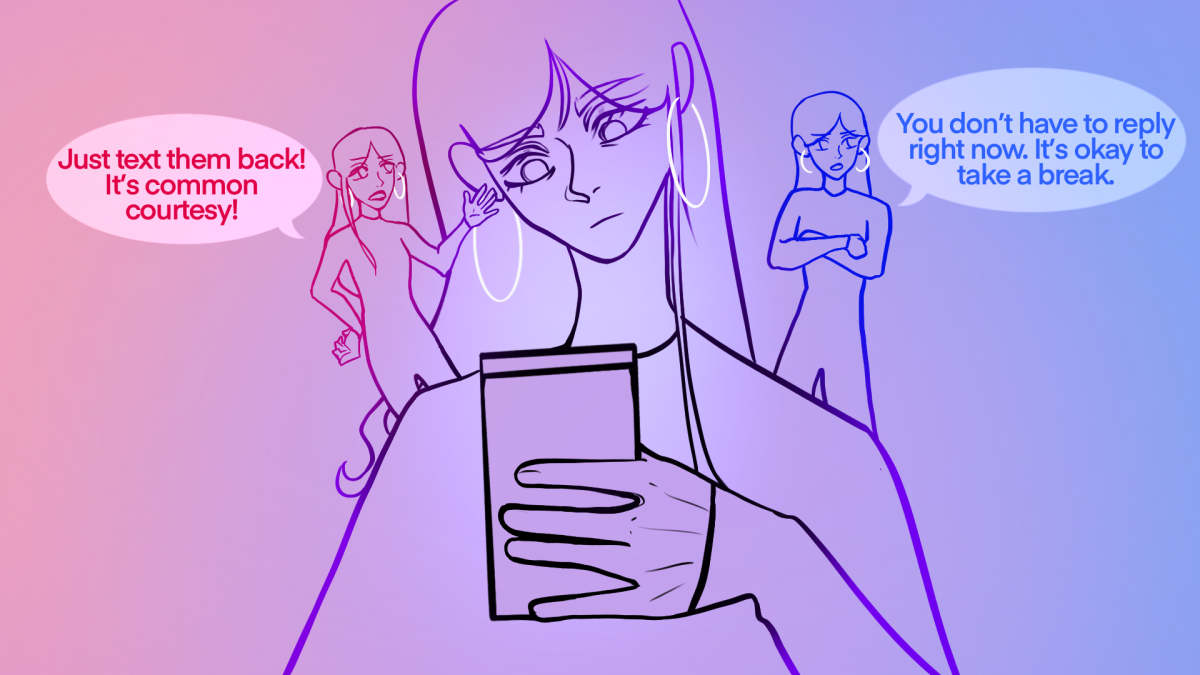
College students are constantly stretched thin. Between classes, clubs, work, studying and pretending we have a social life, sometimes responding right away just isn’t possible.
We all like to think we can balance everything, but the reality is that mental bandwidth runs out, and sometimes the best thing you can do for yourself is silence your notifications for a while.
To be clear: having my number doesn’t mean you’re entitled to constant access to me. And I get the idea of “Well, if you didn’t want to talk, you shouldn’t have given me your number.” But that logic doesn’t hold up here. Sharing my number isn’t a binding contract of constant communication; it’s just a way to connect when we can.
If I take a few hours to text back, that doesn’t mean I don’t care about you. It means even if I did open your message, it inevitably got swept away into the digital abyss alongside my unread Moodle announcements and responses to emails I forgot I even sent.
It wasn’t always this way. A few decades ago, if someone left home, they were unreachable until they got back. You might leave a voicemail or wait until you saw them next and that wasn’t rude, it was normal. Now, because technology makes constant contact possible, we act like delayed responses are personal insults.
A text thread isn’t a leash — it’s a door that opens both ways — ideally when both people actually have time to walk through it.
The assumption that respect equals immediate responsiveness ignores how communication actually works. Real connection isn’t about speed, it’s about intention. A rushed, “hey can’t talk rn,” might seem polite, but it’s rarely meaningful. I’d rather wait until I can respond thoughtfully than send a half-distracted message that I’ll forget about five minutes later.
There’s also a cost to this culture of instant communication. Constant notifications and the pressure to stay available can increase stress and harm focus, something some college students already struggle with. We talk about burnout all the time, yet rarely acknowledge how much it’s fueled by the feeling that we can’t disconnect without disappointing someone.
And yes, I’ve had moments where I remember week-old texts from a friend and my stomach drops. But that feeling doesn’t mean I don’t care — it means I do. It means I finally have the space to respond thoughtfully instead of forcing it between a lab report and a shift at work.
Of course, context matters. If something is time sensitive or important, it’s reasonable to expect a quick answer. But some messages aren’t as urgent. Expecting people to respond to the picture of someone downtown in a Stitch onesie or your question on whether you think ants have feelings isn’t a standard of respect, it’s a recipe for exhaustion.
And if it’s truly urgent, just send a carrier pigeon. Or a voice message, people love podcasts.
The way we communicate should make life easier, not more demanding. It’s okay to take a minute before responding. It’s okay to finish your shift, your assignment or your nap first. A thoughtful response tomorrow is more meaningful than a forced one right now.


