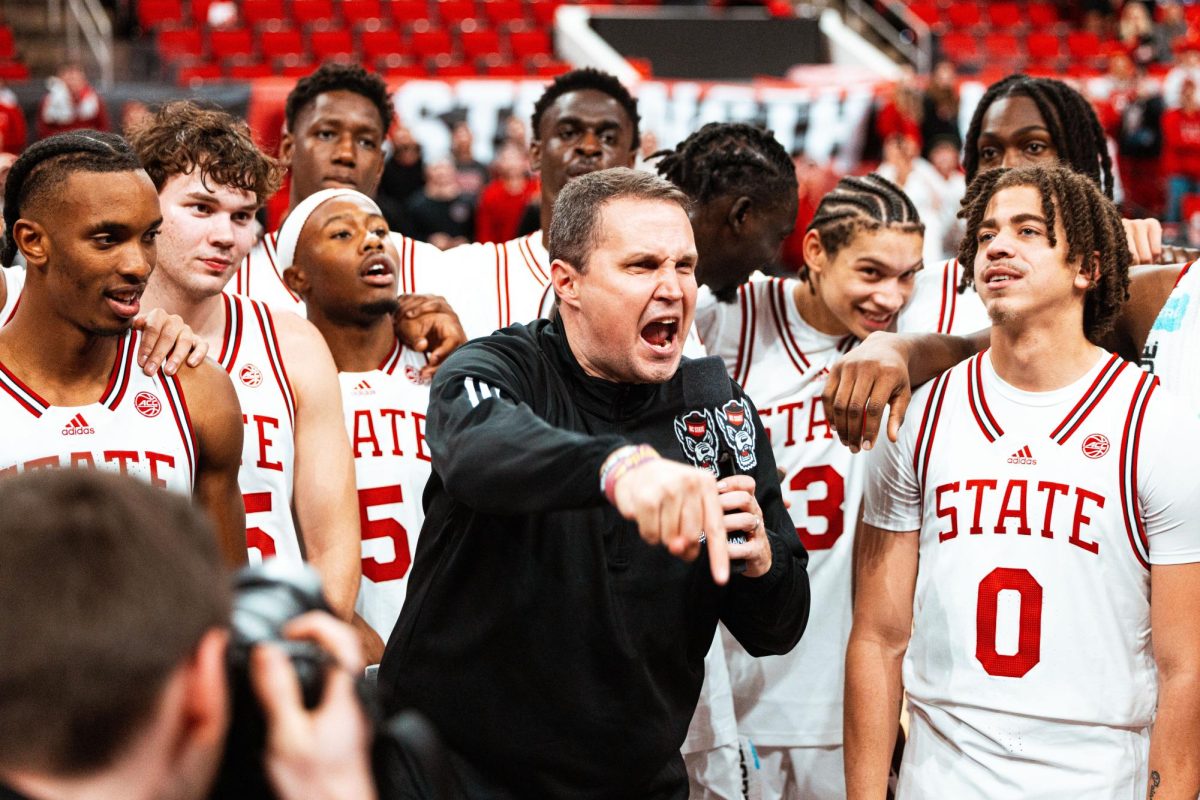
NC State’s long-running debate over logos and wordmarks has shifted into public view after a leaked email about men’s basketball retro uniforms touched off a wave of fan backlash and reopened questions about how the University manages its brand.
On Jan. 22, men’s basketball coach Will Wade told listeners on “Locked On Wolfpack” that he liked the 1983 “STATE” throwback jerseys and the classic “slobbering wolf” logo, but he had little control over when they could be used. He said the team “got a scathing email from the University” after wearing the “STATE” uniforms in the season opener, saying administrators “were not happy” and “didn’t think they quite knew we were wearing the ‘State’ ones.”
“I like the ‘slobbering wolf,’” Wade said on the show. “I actually want to wear the ‘slobbering’ wolf, but they won’t let me wear that on my jacket. I mean, look, it’s a bureaucracy like anything. There’s so much red tape, there’s so much stuff that you’ve got to go through.”
The public did not see the email until it circulated online days later. The message, obtained through public records by On3 and reposted by fan sites, came from NC State’s Office of Strategic Brand Management. The staffer congratulated athletics officials on a “big win” but said “the University brand guidelines prohibit the use of STATE as a stand-alone representation of the University or a team” and warned that the throwback uniforms “cause brand confusion when there is no story or reasoning for using them.”
The email said “STATE” should only appear in connection with the 1974 and 1983 championship teams or other approved “vault marks” and raised concerns about how the jerseys would be explained to retailers and campus partners. The language, including the line about “no story or reasoning for using them,” quickly became a flashpoint for fans who have long pushed for more retro branding.
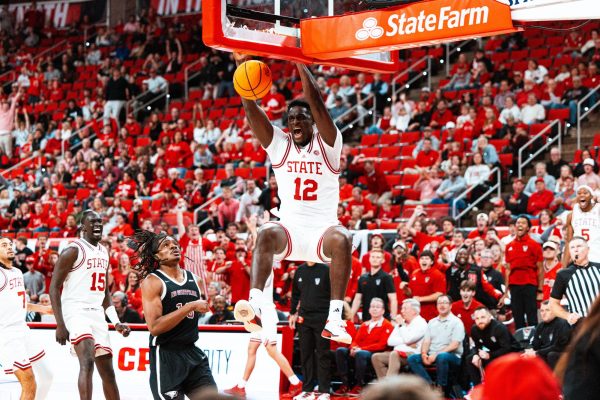
After the leak sparked personal attacks on brand management staff on social media, Wade opened his Jan. 27 postgame press conference with an apology.
“Before we get into the game tonight, I want to address my comments on our retro uniforms and logo usage,” Wade said. “I never intended for this to get out of hand. I appreciate our fans, our fans are incredible. Their passion, there’s nothing like it in college athletics and college basketball. But the attacks on our strategic brand management staff, there’s no place for that.”
As fans debated the email, some club sports and alumni said the controversy mirrored years of quiet disputes over who gets to use which version of “State.”
According to NC State’s trademark guidelines, the only primary spirit logos athletics can freely use are the current Tuffy head, the updated “strutting wolf,” and the “block S” introduced in the 2000s, while other historic marks like the “slobbering wolf” are treated as restricted vintage logos that generally require special approval tied to specific events or collections.
University Communications and Marketing declined an interview with Technician but later provided a statement. The Trademark Office did not respond to Technician’s request for comment.
In the statement to Technician, NC State spokesperson Mick Kulikowski said the school’s trademark licensing program “exists to protect the university’s names, logos and symbols — and to ensure they are used in ways that reflect the institution’s values, history and reputation.”
Kulikowski said the program, established by the Board of Trustees in 1982 and guided by the university’s Brand Use and Protection Rule, designates some marks for broad, current use, while others are intentionally “retired or used selectively in appropriate settings.”
“Our office works with campus partners and a third-party licensing agency, the Collegiate Licensing Company (CLC), which represents more than 700 of the nation’s top colleges and universities, to manage historic or retro logos, also known as ‘vintage,’ ‘legacy’ or ‘vault’ marks,” Kulikowski wrote.
Kulikowski said the selective use of those marks helps preserve their heritage and legal protection while the University “continues to build a recognizable national brand.”
While University officials balance the policy as a way to balance heritage with consistency, some fans remain unconvinced, arguing that the restrictions have gone too far in limiting how NC State’s history can be represented.
Sailing team learned the limits in 2023
NC State’s co-ed sailing team, a club program that competes nationally against varsity opponents, ran into the same rules in 2023 when it ordered custom pinafores, or “pinnies,” modeled after the 1983 jerseys.
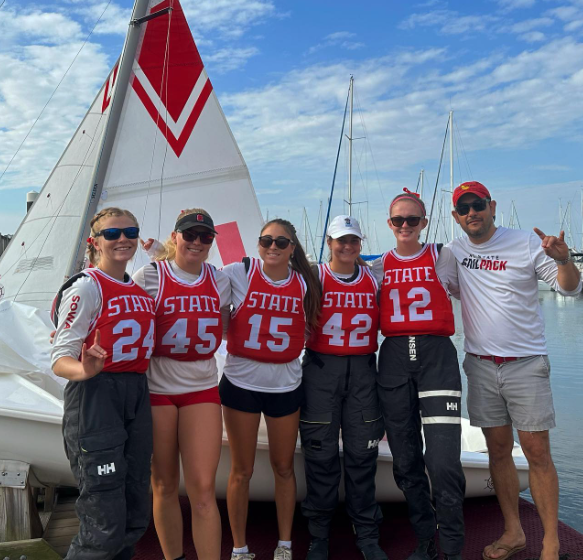
The pennies were made to have “STATE” displayed on the front and “SAIL PACK” on the back, and they were worn at a high-level women’s regatta in Charleston, where NC State’s squad went on to win the event. Magliola said alumni responded positively and the program “got a lot of likes and a lot of attention.”
“On Monday morning, I got an email for trademark and licensing that said ‘about those uniforms,’” Magliola said. “Turns out we probably should have followed a process of getting approval on those uniforms. But again, we didn’t think the word ‘state’ would be trademarked. And so that was a lesson learned.”
Magliola said the team was told the issue was not just about policy but about how unofficial uniforms could affect licensed vendors.
“I’ll admit, we were in the wrong — I don’t want to say that we weren’t,” Magliola said. “ … Unfortunately, they told us that really it muddied the waters for merchandise, and you put the vendors that spend a lot of money to license our merchandise and sell it at risk. That was the nuance here, that this was a risk to the profitability and merchandising. And I get it, that makes perfect sense. But again, I think it’s just your students and the passion of the fan base and the history of the University is more than simply a profit driver.”
The sailing team no longer wears the “STATE” pinnies in competition. They use them only in practice. Still, Magliola said the experience reflects a broader philosophy about club sports subject to trademark regulations.
“I think the policy is misguided and it just comes from a philosophy that the University is risk-averse about its students,” Magliola said. “ … You have student athletes, whether they’re in the athletic department or not, that work really hard and care so much about representing the University and their school, that to be treated at arm’s length, it’s a challenge.”
NC State allows the team’s competition gear to say “NC State” but restricts other uses. Magliola said that creates recruiting and perception challenges when NC State lines up against schools whose club and varsity teams wear full university branding. Magliola said this is an issue across all club sports that aren’t considered official NC State athletics teams.
“Hockey is another example where they wouldn’t be called the ‘Ice Pack’ if they could call themselves ‘NC State Hockey,’” Magliola said. “We wouldn’t be called the Sail Pack if we could call ourselves ‘NC State Sail Team.’ They’re great nicknames, and we have a lot of pride in them. But, unfortunately, it’s a workaround.”
“Who are these decisions being made for?”
Alumnus and Red and White Network blogger Bill O’Donnell said he began noticing changes to NC State’s branding around 2020, when he tried to buy his younger brother merchandise featuring the classic university seal.
NC State’s trademark site says the University Hallmark, introduced in 2018, is now the primary academic mark for “commercial retail items that have an academic or institutional focus,” while the official Chancellor’s Seal is reserved for formal documents. The earlier “commercial seal,” which closely resembled the Chancellor’s Seal, is no longer allowed on merchandise.
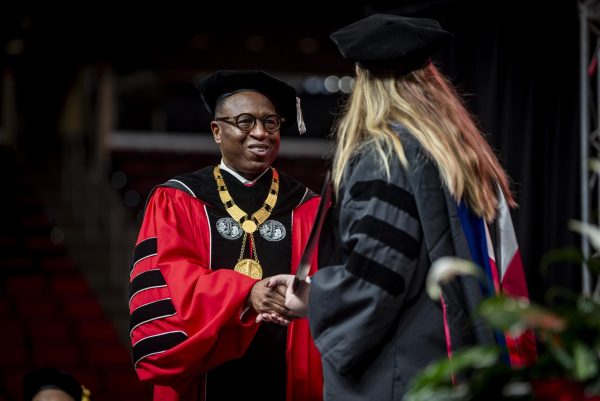
O’Donnell said he contacted trademark officials with questions regarding the different seals. He received an initial reply that cited internal data about branding and merchandise, then heard nothing further.
“The communication from them after that was really non-existent,” O’Donnell said. “I actually got a Facebook message from whoever ran their social media account at the time to ‘give it a rest.’ It was just one of these things where as an alumni and a fan asking questions and curious as to what the impetus was to make these decisions.”
O’Donnell summarized what he called “incredibly restrictive” rules now governing merchandise in a 2024 Red and White Network column. He pointed to wordmark guidelines that bar “State,” “NCSU” and “North Carolina State” from official merchandise, limits on vintage marks and a requirement that “Pack” appear only as “‘Pack” on apparel.
O’Donnell compared NC State’s licensing catalog to Homefield Apparel’s lines for UNC-Chapel Hill, Clemson and Nevada, which feature multiple throwback logos. He noted that NC State’s vintage merchandise is dominated by the “slobbering wolf” logo because most other historic marks, from “diamond S” logos to older “strutting wolves,” are generally not available to retailers.
University materials emphasize the uniqueness and financial value of the Wolfpack identity. An official story on NC State’s website traces the “Wolfpack” nickname to 1921, and notes that the University began registering “Wolfpack,” the “strutting wolf” and “block S” as federal trademarks in 1983. The same article says NC State trademarks now generate more than $1 million annually in royalties for the general scholarship fund and that the Office of Strategic Brand Management, created in 2019, works to protect those marks from “encroachment or unauthorized use.”
O’Donnell said he does not dispute NC State’s need to protect the uniqueness of the brand, and wants the University to open a conversation about how it does so.
“If you’re not going to listen to your fans and alumni, then what’s the point of this?” O’Donnell said. “I hope that the University is able to move forward with continuing market in a unified framing message, but at the same time understand that there’s some level of creativity outside of the lines that makes a lot of sense and should honestly probably help all parties involved, and shouldn’t be looked at as a detriment to your overall brand.”