

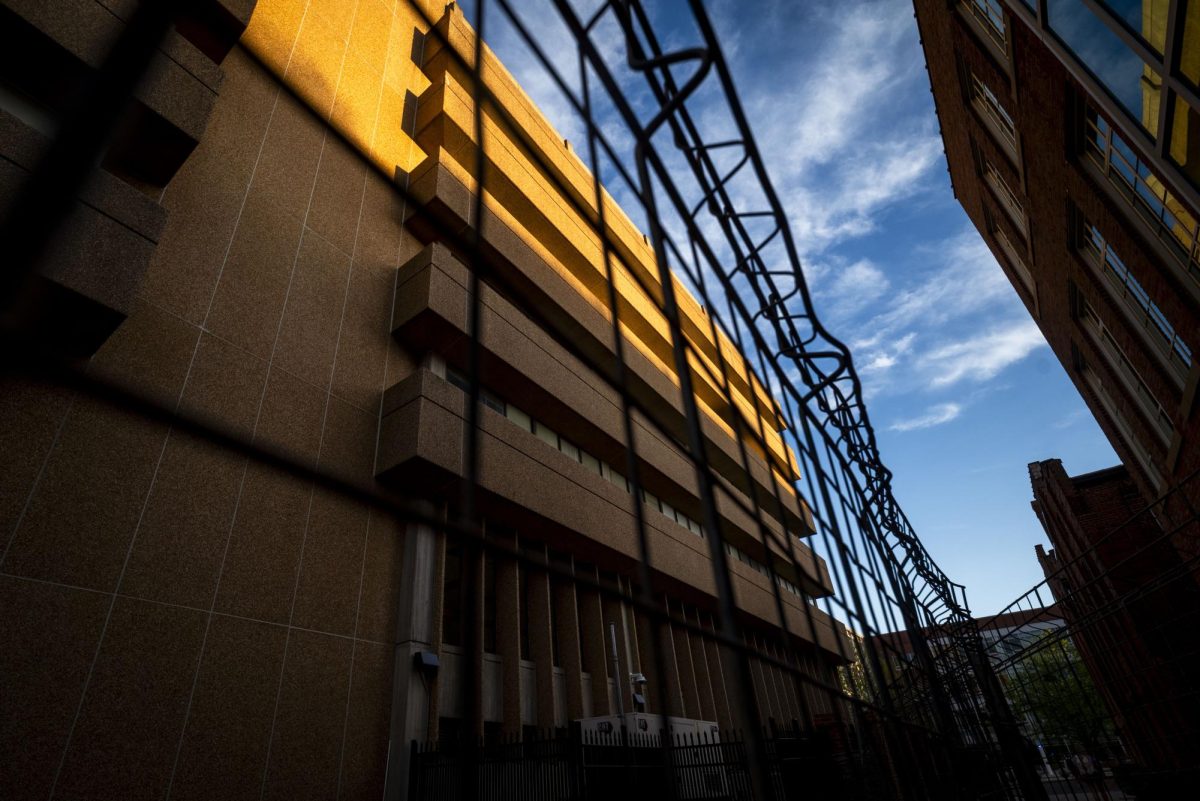
No one steps in as thousands of people have unknowingly been exposed to potential carcinogens in buildings across our campus. Fortunately for the powers at fault, there are seemingly no major consequences to stress about.
Multi-million and billion dollar companies use toxic building materials that work well but cause issues like cancer, infertility and liver damage to people exposed to them. Asbestos, PBCs and formaldehyde are all famous examples of good building materials with carcinogen risk. The common narrative surrounding their use is that these chemicals were useful and manufacturers didn’t know of their effects.
However, the more correct narrative would be that the companies did know the dangerous effects, but didn’t care.
In the case of Poe Hall, manufacturers knew since the 1930s that PCBs, the carcinogen found in Poe Hall, were very dangerous. Many who worked with the chemical repeatedly got dangerously ill with a loss of energy, appetite and libido. There’s even an instance of two people getting bad pustules though contact with a worker’s clothes.
In 1979, eight years after Poe Hall was constructed, PCBs were outlawed. Like many other pre-1979 buildings, Poe Hall had a high risk of containing PCBs — in this case, 38 times the amount that would typically be allowed in a modern building. A lawsuit currently stands between NC State and Monsanto, the company that built Poe Hall, with the University filing against the company for liability.
PCBs stay in the body for years, undergoing a period of latency until potentially causing cancer much later. That’s why cases for Poe Hall took decades to settle in. Poe Hall had a greater incidence rate of melanoma between 1995 and 2022 than what was expected in the general population, mainly among female employees, indicating that this was not some grand coincidence.
The cancer cases for Poe Hall have been increasing, and will likely continue to, with 40 confirmed cases in 2024 to over 225 by 2026.
However, the big picture isn’t in the numbers.
There were many indicators that Poe Hall might’ve been dangerous, yet no one came to the rush to ensure the safety of over 4000 students and faculty members who had regular exposure to the building.
Monsanto was the main manufacturer known for using PCBs, and again they knew about the dangers of PCB, so both NC State and Monsanto should’ve had their radars going off. But even then, they didn’t have to — someone had radars going off for them.
A letter from 2012 describes an incident from 2007 sent to the University’s environment health department, where faculty members of Poe Hall noticed the poor air quality, and even had an employee place a cheesecloth-like fabric over the vents to act as an extra filter. The associate dean requested testing for the building, although it’s unclear if it ever was.
Again, alarm bells should be going off, with warning after warning that something may be awry with the building. A longing sense of insouciance is what permeates the whole story of Poe Hall.
NC State still shows a painful lack of concern towards its campus health safety. Most notably, Dabney Hall was built in 1969, in the period before carcinogenic materials were banned. Faculty have not felt heard in their concerns about the building.
Similarly, DH Hill library has 440 times the amount of PCBs in its outer caulking and 23 other buildings were found to have potentially deadly carcinogens.
Not caring about human life by simply trying to keep the capital safe is what surrounds the whole story of Poe Hall, and many other buildings in NC State. No one’s taking responsibility, and hundreds of people are battling cancer, with 25 believed to have already died.
If any person was putting thousands of lives at risk, they would be tried criminally and risk their lives being ruined. However, because everything is delegated to another committee, every party involved feels like they could potentially shimmy their way out of paying any consequences.
Students at the very least should be made very aware of these building’s risks. Mandatory masks, changing the classrooms or even clear signage about the dangers would be helpful. But nothing.
NC State seems complacent trying to hide its irresponsibility. If people get cancer in a few decades, they won’t think of the University as a possible source without NC State not only taking accountability, but taking action to protect the safety of its students.
The parties involved should be held for criminal trials. If they were people, they would be held in criminal court. However, when they are only held civilly, allowing them only to pay their way out if they get tried.
Overall, the whole situation is bleak and disturbing. The dangers of these buildings should worry students and faculty alike.


