
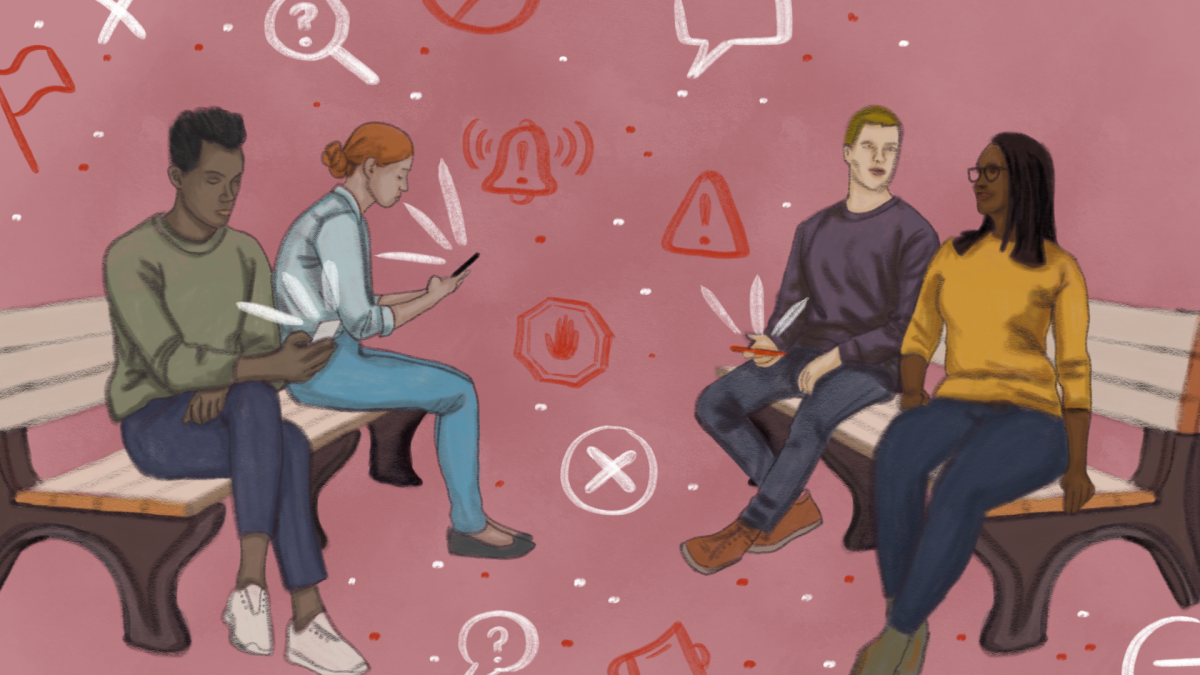
We’re used to instant gratification, quick answers, short videos and information on demand. History has been pulled into the same rhythm. On platforms like TikTok, X and Instagram, the past is consumed through short posts and videos one after another. But 60 seconds is nowhere near enough time to get the full story.
One in five Americans regularly get their news on social media, and for a generation raised online, our understanding of history is increasingly shaped by what scrolls across our screens instead of through deeper, verified sources.
Kimberly Vincent, a professor in African history, said, “The whole point of doing history is that you take the evidence you have and try to interpret it into creating a story. A story is always going to come with a certain degree of subjective interpretation.”
Social media often skips that nuance, encouraging certainty where complexity belongs.
This becomes evident when it comes to Black history. Colonialism, slavery, resistance and cultural achievements are often reduced to simple narratives of oppression and survival.
These compressed versions of history leave little room for complexity or context, turning centuries of lived experience into a narrow storyline that prioritizes suffering while overlooking creativity, political thought and so much more.
In narratives that frame Black history through slavery and the Civil Rights Movement, context is lost, agency is erased and entire generations of achievements go unnoticed. This framing suggests that Black progress only occurs during moments of crisis, ignoring the continuous work of educators and leaders who shaped their communities both before and after these defining eras.
“One of the biggest misconceptions I see is that history is taught as heroes and villains, good and bad,” Vincent said. “When it comes to African history, that kind of thinking erases agency and flattens complex societies into a single story.”
This erasure can start with curriculum limits in high school. Lessons are often broad and compressed leaving gaps that social media can easily fill. Vincent has noticed that many students arrive in her history classes with partial or outdated information. Online, those simplified stories spread faster than nuanced explanations.
“History is complicated, and people are uncomfortable with gray areas,” Vincent said, “It’s easier to believe simplified stories than to sit with complexity.”
Social media can spark curiosity, but it doesn’t require critical thinking. These short-form posts reward entertainment over accuracy.
The pattern of repetition shapes our perception of history, making it easy to accept partial truths or one-sided narratives, like those implying African and Black history are one in the same. Understanding history as it happened is important because it shapes how we understand the world and interact with those around us. When history is simplified, entire communities are subject to being dismissed and their complexity and resilience is overlooked.
Misunderstandings about Black history don’t just erase achievements, they reinforce stereotypes and make it harder to engage with current social issues in an informed way. Vincent said. “Unless you’re willing to do additional research on your own, it [social media] should be treated more like entertainment than a source of information.”
When we fail to put in effort, curiosity stops where understanding should start, and social media gives certainty where research should be taking place. Learning about Black history out of context is what reinforces stereotypes and limits opportunities for representation in education and media.
Lack of nuance affects representation for the youth as well, students may be less likely to see Black scientists, artists or activists as role models. Educators might miss the bigger picture of systemic issues and Black-led contributions.
Misunderstanding Black history narrows perspectives, making it harder to challenge discrimination or even celebrate the idea of Black resilience and innovation. Disregarding social media as a source of information isn’t the goal, but using it as leverage can deepen our understanding of history instead of treating it as the only or final authority.
When you watch a video, or scroll past a post regarding Black history, take an extra two minutes to verify the actual historical context instead of turning to the comments — it’s the difference between learning the full story and accepting a simplified or misleading version.
Black history, like all history, deserves to be approached with care and nuance. When we slow down and resist the pull for instant gratification we are able to move closer to understanding rather than just consuming.