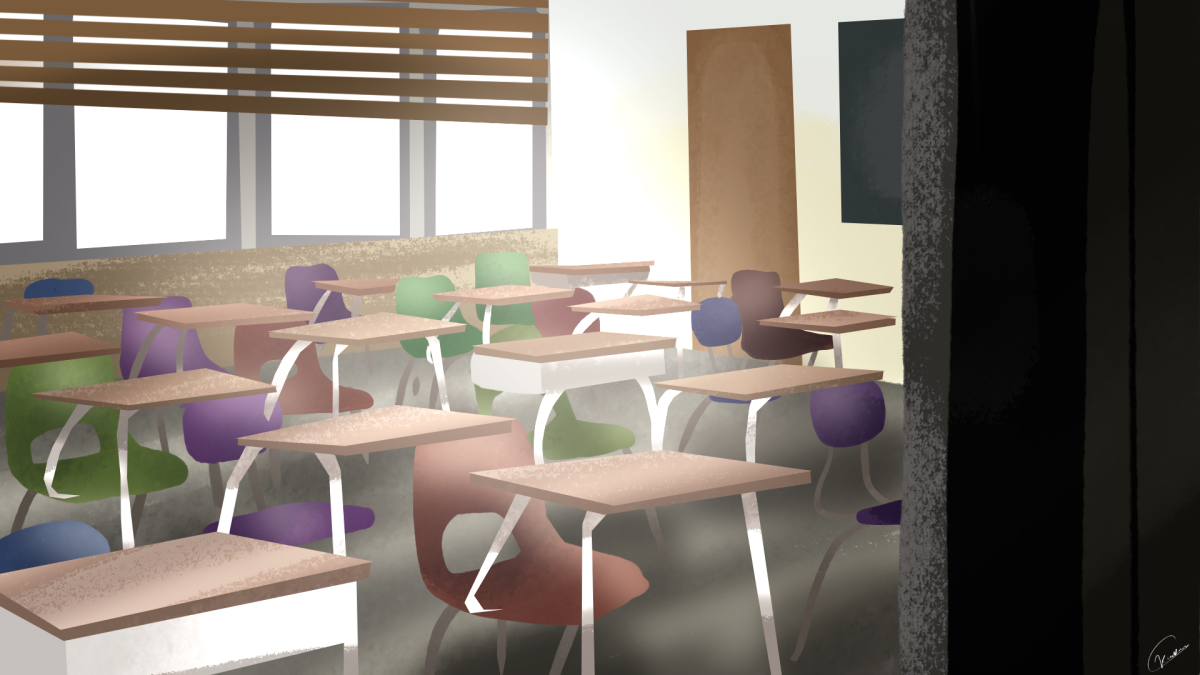


College classrooms are meant to be a space for instruction and an environment where new ideas are introduced and clarified through guided discussion. But the flipped classroom method, where students learn material on their own before class, changes that purpose.
Instead of presenting new material during class, flipped classrooms require students to learn foundational concepts independently, making lectures homework. Class time is reserved for aspects such as application and collaborative work.
Supporters of the flipped classrooms strategy argue it promotes engagement. But in practice, this method shifts the burden of initial understanding from instructors to students.
Alondra Torres-Ornelas, a graduate instructor in Spanish at NC State, has used the flipped method in her Spanish courses.
“In my experience, it has been beneficial for students because when they come to class, they are willing to create with the language,” Torres-Ornelas said.
In language learning, interaction is important. Speaking and practicing in class can build confidence and fluency. However, even within this context, this method relies heavily on preparation completed outside the structured instructions.
“It’s definitely important to complete and be familiar with the homework,” Torres-Ornelas said. “So when you get in the classroom it’s not just lecture, but you being able to engage.”
However, this expectation of familiarization can become the main issue; the flipped classroom only works if students successfully teach themselves the material beforehand.
Traditional classrooms introduce new concepts in real time. Students encounter unfamiliar material alongside their instructor which allows for immediate clarification and adjustment. Questions are answered as confusion arises and the instructor gets to guide the first exposure to information.
In a flipped classroom, that first exposure to course content happens alone. Students are expected to review all materials on their own before coming to class, with each instructor using different online platforms or structures to present information. Learning how to navigate platforms like Cengage, WebAssign and Moodle are an additional challenge students are expected to navigate on their own.
If a student misunderstands a concept while watching a recorded lecture or completing assigned readings, there is no immediate correction. By the time class begins, the expectation is participation, not explanation. Class discussion assumes comprehension rather than building it.
This structure also assumes a level of independence and external stability that not all students have. College students balance coursework with jobs, family responsibilities and so many other commitments. Not every student has equal access to quiet study spaces or extended time to process difficult material independently.
While I see the incentive for classrooms to create more balance, it is difficult to see how it is deemed better than the average classroom setting. Is the balance between teaching and self-teaching? Between instruction and independent interpretation?
People can argue that flipped classrooms encourage active learning, but it does not require removing structured instruction. Discussion and collaboration can coexist with guided lectures. Engagement does not have to replace explanation.
The classroom serves a purpose beyond application. It is a space where students are introduced to new ideas with support, contest and accountability. When foundational instruction is treated as homework, the classroom becomes less about learning and more about demonstrating prior understanding.
That shift changes the dynamic between instructor and student. It reframes education as a process students have to initiate alone before they are allowed to participate meaningfully.
Flipped classrooms may work for highly self-motivated learners. They may succeed in smaller, discussion-heavy courses. But educational models should not be evaluated solely on their success in optimal scenarios, instead by how well they support the widest range of learners.
Moving instruction outside the classroom risks redefining what it means to teach. If students are expected to know new concepts independently before entering the classroom, then the value of the classroom is challenged. Innovation in education is valuable, but it should strengthen accessibility and clarity, not shift responsibility away from the very space designed to provide it.
Instead of relocating instructions outside the classroom, professors can build engagement into traditional course design. Shorter, focused lectures followed by guided practice allows students to first encounter new material with the instructor’s support before collaborative application.
In person comprehension checks, structures discussion and small group problem solving can increase participation without requiring students to teach themselves foundational concepts by themselves.
Active learning does not require a flipped classroom approach, it simply requires thoughtful integration of both learning and practicing. By strengthening engagement within structured instruction, it’s easier for professors to preserve clarity and interaction without shifting the burden of learning onto students alone.
Education should not depend on ideal preparation conditions. It should account for variability in student experience. A system that functions only when students arrive fully prepared risks widening gaps between those who can manage independent learning effectively and those who cannot.