
At a university where students are encouraged to prepare for the job market as early as their first year, even free time can start to feel like a wasted opportunity.
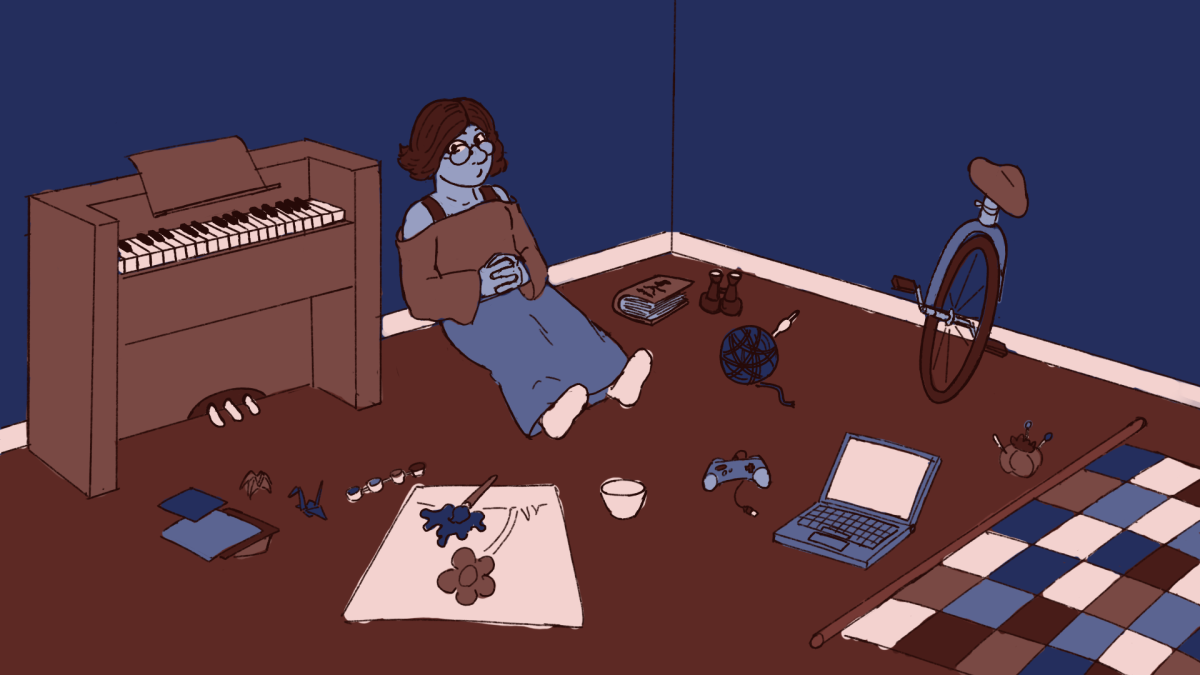
At NC State, conversations about internships, research and career preparation are constant. That pressure doesn’t just stay in the classroom — it often extends into how students spend their time outside of it. Hobbies, traditionally understood as activities done for enjoyment, are increasingly framed as chances for productivity.
Art becomes something to sell. Working out becomes something to track or post. Reading becomes solely done for self-improvement. In many cases, the expectation is the same; if time is being invested, there should be a measurable return.
This mindset is not specific to NC State. The American Psychological Association has found that many young people feel overwhelmed by stress, driven in part by academic, financial and future-related concerns. As career anxiety becomes more normalized, so does the idea that even leisure should serve a purpose.
That expectation, however, comes with tradeoffs.
When hobbies are treated as extensions of academic or professional work, they stop functioning as breaks from those systems. Instead of offering rest, they become another space where performance and outcomes matter. Over time, that can make it harder for students to disengage from the constant pressure to achieve.
And yet, some of the most meaningful ways people spend their time offer no return at all.
For me, that looks like an ongoing, slightly irrational obsession with marine biology. I am not studying it. I don’t plan to work in the field. It has never appeared on an application and likely never will. Still, I spend hours reading about marine life and animals or watching videos about the ocean for no reason other than the fact that I enjoy it.
The same is true for art. I have never sold a piece and do not intend to, but I once spent over $100 in an art store simply because I had ideas I wanted to try. There was no end goal, no audience and no outcome beyond the experience itself.
By most productivity standards, that time and money would be considered wasted, but it wasn’t.
Experiences that make daily life feel fuller are not impressive or strategic, but they are personal, and that’s what makes them matter the most. When everything is evaluated based on usefulness, it can become easy to overlook what actually makes life enjoyable.
Research on burnout has consistently shown that people need time that is not goal-oriented to recover effectively. If even hobbies are tied to outcomes, rest becomes harder to access. The result is not just exhaustion, but a growing disconnect from the things that once made you feel alive.
Students are told to be well-rounded, but that idea is frequently interpreted in professional terms for leadership roles, internships and job skills. What gets left out is the importance of having interests that exist entirely outside of achievement.
Not everything you do needs to contribute to your future in a tangible way. If there is something you enjoy — something you return to even when it offers nothing in return — that is reason enough to keep doing it.
Let yourself care about something that offers no professional bonus. Set aside time for it without trying to justify it afterward. Spend money on it if you want to and go further than you think you should, even when it doesn’t translate into anything useful.
College will most likely keep asking what your interests can do for your future. You do not have to answer every part of your life in those terms. Choose one thing that is entirely yours and do it for the love of the game. A life built only around output may look successful on paper, but it can feel incomplete if there is nothing in it that exists simply for you.


