

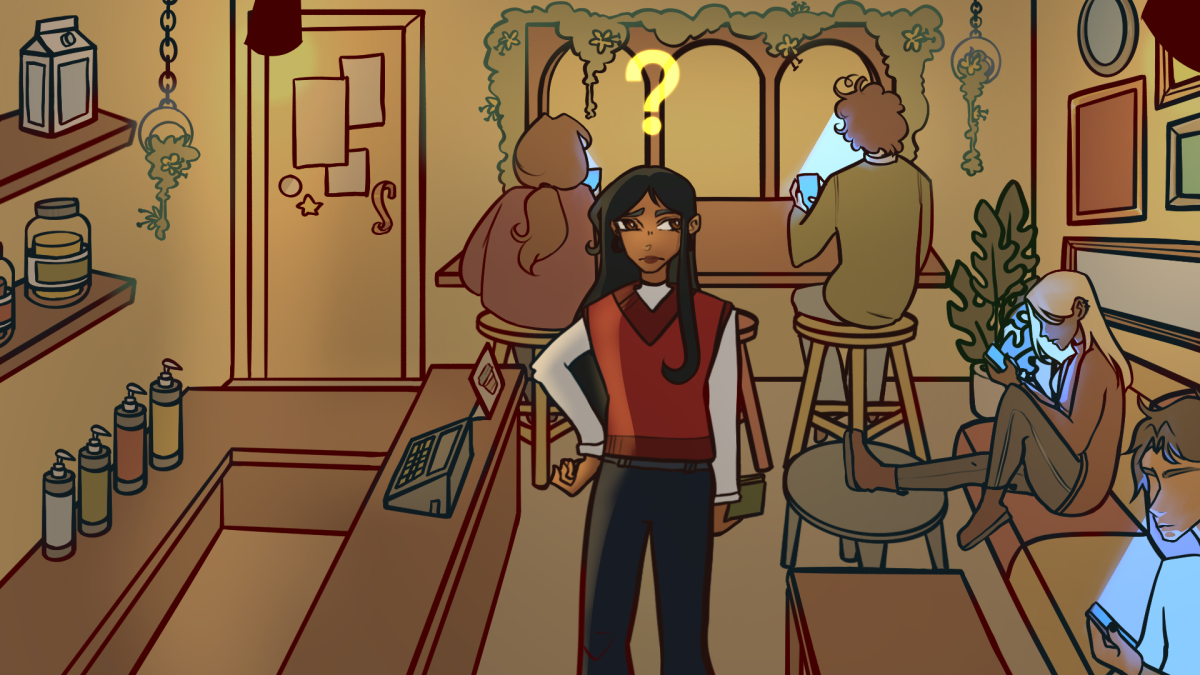
Long gone are the days of people deep in conversation on the sidewalk, bustling parks and comfortably crowded coffee shops. Our society used to thrive on connection, now you risk getting side-eyed for striking up a conversation with the person in front of you in line.
Society has lost its flair for casual conversation and connection with strangers. Many people blame this phenomenon on the prevalence of screens and social media. In tandem with this, a lack of third spaces is leading to loneliness and lack of connection, especially in young adults.
Third spaces are a place besides home and work where people go to socialize for free or cheap. Examples include community centers, bars, coffee shops, parks and social clubs.
Following the COVID-19 pandemic, many of these places struggled to stay in business and closed down permanently. Rising costs and inflation have also made the number of cheap activities drastically decrease.
This lack of third spaces can have a negative impact on mental health, leading to loneliness and less success in romantic and interpersonal relationships. Expanding beyond your usual social circle and having a place to connect and decompress is crucial for mental wellness.
Many third spaces are based on a common interest or identity. Connecting with like-minded individuals can help people feel less alone and form romantic and platonic connections they wouldn’t find elsewhere.
A steadily decreasing amount of third spaces particularly affects college students. College students are often overwhelmed with work, school and financial obligations, meaning a low-effort place to come together would be very beneficial for reducing stress and finding a support system.
Fortunately, there are still a few third spaces left for us to enjoy right here in Raleigh.
The Red and White Run Club, founded in 2024 by Trent Lose and Polly O’Neal, is a place for students and recent graduates to come together weekly to run and socialize. The club also previously met up at Redline, a popular wine bar on Hillsborough St, to socialize post-run and participate in trivia.
Isabelle Zarsadias, a fourth year in environmental technology and management and the co-president of The Red and White Run Club, says that the organization is very beneficial to student’s mental health and supports them in stressful times.
“It helps people get out of the house. School’s stressful and having a set time of day where you get to go move your body, talk to people with similar interests … is really beneficial to mental health,” Zarsadias said. “I know when I’m stressed with finals, I look forward to Tuesday at 5:00.”
In addition to college students, a lack of third spaces disproportionately impacts marginalized groups. People in these groups may find it difficult to make genuine connections and find safe spaces.
The LBGT Center of Raleigh opened in December and is a great example of a third space that is positively impacting a marginalized community.
Kori Hennessey, the executive director of the LGBT Center of Raleigh, feels that spaces such as these are very beneficial for mitigating loneliness and fostering community connection.
“Connection is one of the most important parts of trying to live a healthy life. Folks in the LBGTQ community, specifically the older LGBTQ community, really deal with loneliness and not feeling connection,” Hennessey said. “Having opportunities such as these really increases mental wellness in so many ways.”
The LGBT Center of Raleigh provides many different resources such as a gender affirming care closet and a LGBT library. The center also has various social events to promote connection and well-being.
“We have our annual Re(a)d to Filth Ball this month, which helps raise money for our library and community center space. We also put on Out! Raleigh Pride every year,” Hennessey said. “We also have some smaller events such as Transgender Social, book club and game night. We have a lot of different things that the community has said they want to see.”
A lack of third spaces has contributed to social isolation and loneliness, especially in recent years. It is very important that we combat that by participating in the communities we’re passionate about and not being afraid to find connections wherever we go.

