

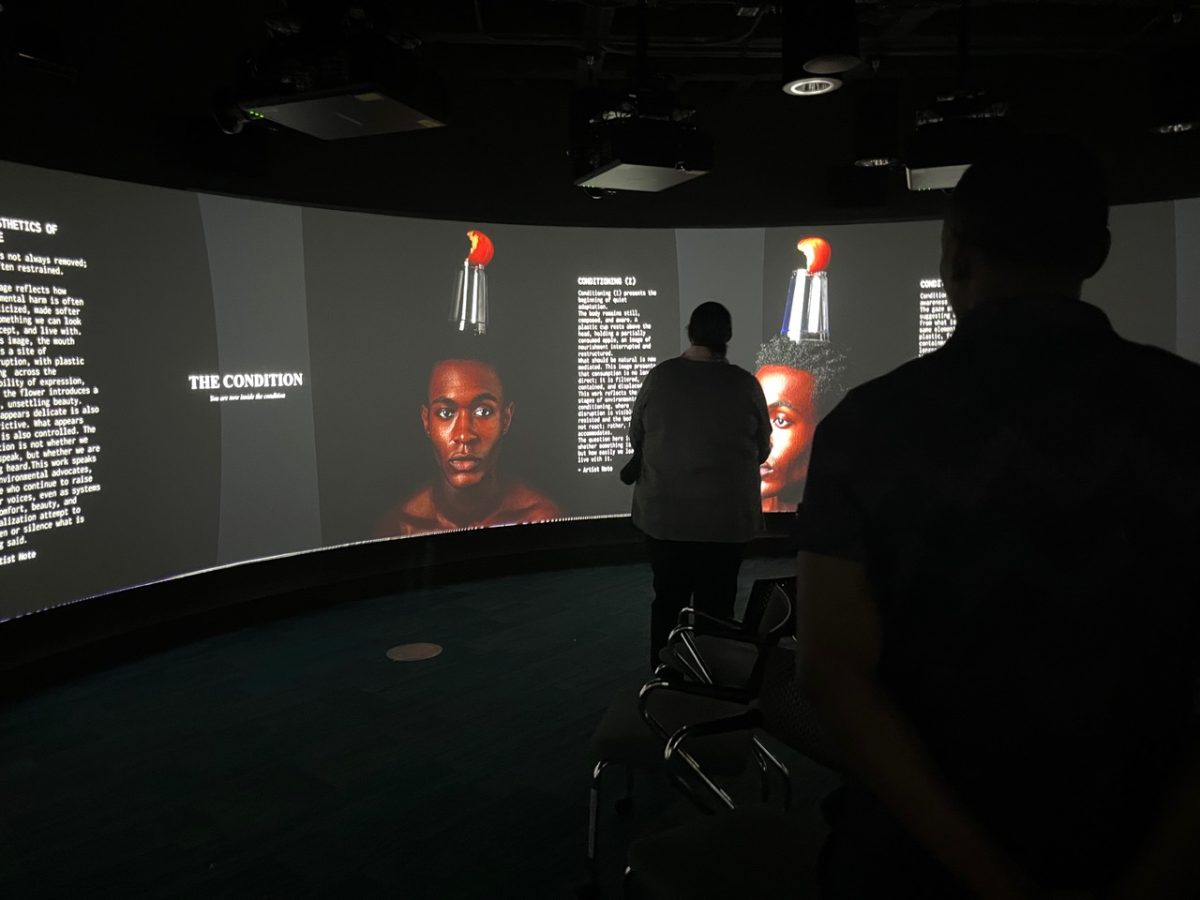
“What We Leave Behind,” a photographic exhibition centering plastic pollution and the generational impacts of consumption, was projected in the Cyma Rubin Visualization Gallery on May 5 and 6.
The photographic exhibition was created by Oluwasola Israel Abimbola, who graduated in May 2026 with his M.S. in Communication. As a part of his second-year independent study, Abimbola researched plastic consumption and created a photo series representing the interpersonal and environmental impacts of plastic use.
Growing up in Nigeria, Abimbola experienced the direct consequences of careless pollution. His town would flood due to drains clogged with plastic waste. After moving to America, he saw different disposal habits, but no regulation or mindfulness about consumption.
“The consumption is getting excessive,” Abimbola said. “Are we thinking about what we are living behind for the next generation? Are we thinking about how to cut down on our use?”
Inspired by other artists using recycled materials, Abimbola heavily featured plastic and waste in his photography. Groups of images were presented, each with their own theme, model, set pieces and props. For the shoots, Abimbola and his collaborators created dresses out of plastic sheets, a mask to symbolize suffocation and incorporated greenery and flowers.
Through the images, Abimbola told stories of generations united in their reliance on plastic, the normalization of microplastic consumption and the burden of living with the knowledge of environmental harm.
“I led up the entire series up to the last part titled “What We Leave Behind,” with people inside plastic,” Abimbola said. “We are living in plastic, and I want us to reflect on that and see how our actions are being transferred to the younger generation.”
The gallery was presented in the Cyma Rubin Visualization Gallery on dark walls with strikingly large images, details blown wide and faces seeming close and intimate. Beside each image was a projected caption explaining the artist’s intentions.
The Visualization Gallery is a round room equipped with an array of eight projectors, each running on the same operating system to create one cohesive image across the walls of the space. The immersive experience is intensified by a surround sound system and a calm darkness, isolated from the busy library third floor.
The space can be requested for use by anyone affiliated with NC State, often by professors seeking engaging experiences for their classes or artists hoping to uniquely present their work. Over the course of weeks or months, librarians and staff work with presenters to achieve their vision and utilize the space to its fullest potential.
Abimbola reached out to Hannah Rainey, the associate head of the libraries collections and research engagement department, to use the space for his final presentation. It was the perfect environment to present Abimbola’s work, “What We Leave Behind.”
“The exhibit was asking viewers to think about plastic consumption, and to sort of feel it in their bodies,” Rainey said. “And we’ve seen with other projects, because it’s immersive and round, it creates this sort of different experience than if you were to just look at something on a laptop.”
The space also allows projects to be experienced by multiple people simultaneously, as opposed to solitary technology like virtual reality. Exhibitions are open to both NC State community members and the public, providing a unique opportunity to share research or artwork in an immersive space.
“The Cyma Rubin Gallery provided a very great space for us because it acts on the body. It helps you to move around the space and allows you to feel it,” Abimbola said.
Rainey said the gallery is a prime example of University Libraries’ mission to stay on the cutting edge of technology and serve students.
“It’s great preparation for the various ways that students will have to present their work in the job market,” Rainey said. “For me, more significantly, it’s just that sense of accomplishment of really having done something.”
You can view an archive of presentations, including more information about “What We Leave Behind,” in the Cyma Rubin Visualization Gallery here.

