

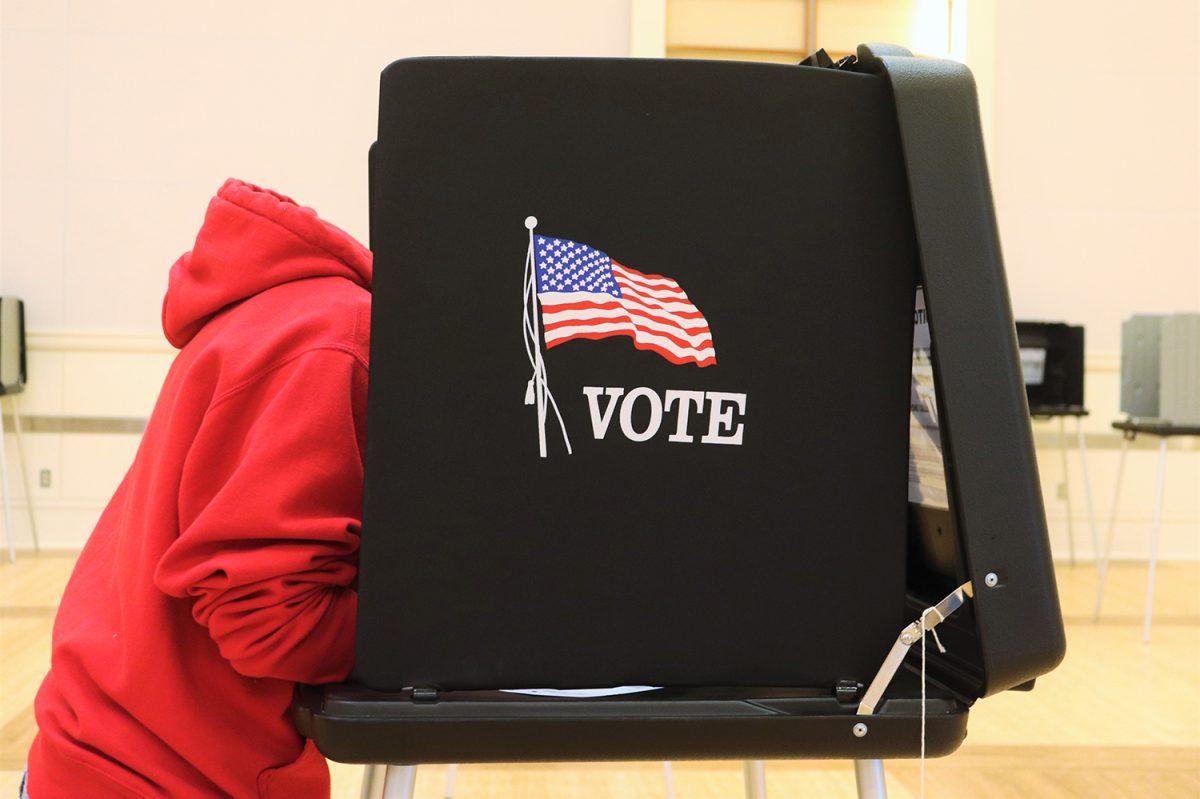
North Carolina’s top election officials voted last week to strip early voting sites from multiple college campuses, a move student organizers and two Democratic board members say will make it harder for young and Black voters to cast a ballot in 2026.
Every election cycle, county boards propose their early voting locations and hours, sending split plans to the State Board of Elections when they do not agree unanimously.
Twelve counties landed before the state board this month, including Guilford County, home to North Carolina A&T State University and UNC-Greensboro, and Jackson County and Alamance County, which house Western Carolina University and Elon University respectively.
State Board member Jeff Carmon, one of two Democrats on the five-member board, said Republican colleagues backed county plans that removed campus sites over his objections.
“The reasons that they shared, which I do not agree with, is that parking was an issue on campus,” Carmon said. “The logistics was another rationale they used. No reason that I find acceptable.”
Fellow Democratic board member Siobhan Millen said the pattern across counties goes beyond routine disagreements about logistics. She pointed to four moves in particular: removing Western Carolina and Elon University’s established campus sites, rejecting proposed early voting sites at NC A&T and UNC-Greensboro, favoring wealthier off‑campus neighborhoods over locations that primarily serve students and lower‑income voters and dismissing campus sites as redundant or too costly, even though many students lack cars.
“When I see those four things happening all in a space of a couple months, I connect the dots and say, somebody is trying to crack down on college voting,” Millen said. “And it’s not just college students voting, of course. A lot of the people who vote at a college site are the staff and administrators, the grad students. … College voting is in the crosshairs.”
After Guilford County’s Republican majority board voted 3-2 to remove the NC A&T campus site, students organized rides to both the county and state meetings.
“We all got up at like 5 o’clock in the morning actually,” said Yasmina Issaka, a third-year at NC A&T studying health services management and member of the university’s Civic Engagement Coalition. “We traveled all the way down to Raleigh … [we were] trying to be encouraging towards one another that whether or not we get the results that we want now, we’re going to be making an impact.”
Students arrived at the State Board meeting with handmade signs that Carmon said displayed phrases like “Don’t take our vote from us” and “I don’t have a car, don’t make me Uber to vote.”
Francis De Luca, chair and a Republican member of the Board, originally told the students that signs would not be allowed, but Issaka said Carmon pushed back, considering the Board meetings do not have a scheduled open-comment section.
Issaka said representatives from the Guilford County Board of Elections spoke at the meeting and delivered four boxes of letters they received from students and community members advocating against the removal of the polling stations, which she said remained “untouched” for the entirety of the meeting.
During the ruling, Issaka said Carmon and Millen were “fighting for us a lot,” but the Republican members did not seriously engage with the arguments. In her view, the majority let the process play out on paper while making clear “they didn’t care at all” about student input and were intent on backing the county Republicans’ decision.
“[The Republican members] were just acting as if everything [Carmon and Millen] were saying was incompetent or didn’t make any sense or undermining everything that came out of their mouths,” Issaka said.
When the Board ultimately voted to uphold the county’s removal of the NC A&T site, Issaka said students stood to ask the Board for answers, to which Issaka and the Democratic board members said De Luca said he would call the police on them.
“We stood up in front of them and basically asked, ‘So why are we getting our voting site taken away? Can we at least have a reason?’ And that’s when [De Luca] threatened to call Capitol Police on us,” Issaka said.
De Luca has not responded to Technician’s requests to comment.
At another point in the meeting, Issaka said Stacy “Four” Eggers IV told the students, “Y’all are very smart and capable students. Y’all can find a way there.’”
Millen said similar attitudes surfaced repeatedly during the meeting.
“They also said things like, ‘You guys are college students, you’re not kindergarteners, you can find another place to vote,’” Millen said.
Both Carmon and Millen said they saw no compelling justification to cut Sunday voting hours in several counties, a change that also affects working-class voters and “souls to the polls” efforts.
“They just say they don’t favor voting on the Sabbath,” Millen said. “They think people should have a day at home, and the poll workers should have a day at home. … I just feel for counties like Greene that have had Sunday before, to take it away is just a retreat from offering full voting opportunities for everybody. I don’t see any good reason for it.”
Carmon said he sees the impact most clearly in rural communities.
“Many of our population has jobs where it’s labor-intensive and they work through Saturday and Sunday gives them the opportunity to vote,” Carmon said.
Issaka said she believes the loss of NC A&T’s on-campus site is directly tied to the university’s civil rights legacy and a population of young Black voters that could challenge incumbents.
“We’re super big on advocacy, and eliminating the voices of the nation’s largest public HBCU, I feel like that’s a given for where we are right now in government, like who we have in office and the people who are trying to keep an office looking upcoming midterm elections, it was essential to make sure that the voices of this school in particular were not able to be heard, that those votes are not able to be counted and that they would be able to keep the majority that they have currently.”
Issaka said the Civic Engagement Coalition is raising money for shuttles to off-campus polling places and planning walk-to-vote events for the primaries.
Carmon said he is counting on students across the state, including at NC State, to respond to the loss of campus voting access by turning out anyway.
“Your generation will not just vote,” Carmon said. “I feel that your generation will continue to fight for their rights and will not dismiss the power of their vote.”