
Social media has changed the way our media landscape functions, and our attention is no longer centered on official news channels. Rather, we look directly to our leaders, through their social media and have access to them and their personal lives like never before.
Paul Agada, a graduate student in communication, is currently researching misinformation on social media. He said that, while politicians used to be constrained by space and time, they now have access to their entire constituency in the comfort of their own homes.
The political game, Agada said, is now playing out on our screens. Social media has become part of the strategy and public persona of politicians, arguably more important than their campaign promises or policy.
“We’ve gone from the age where politicians just post personal pictures because it’s what they are doing, to where everything is calculated, everything is tactical,” Agada said. “Of course, we do not blame them because the game is the game.”
Emily Holden, a graduate student studying communications, is originally from the 14th district of Georgia. Her representative was Marjorie Taylor Greene, who became a nationally recognized figure for her support of Donald Trump and his MAGA movement. Greene is just one example of local politicians turned national celebrities through their engagement with President Trump and the MAGA base.
“She is so famous that it has kind of drawn a level of celebrity to where I’m from. It’s making the local less local because she is such a prominent figure,” Holden said.
Holden compared it to other campaigns run by Democrats, like Kamala Harris’ bid for the presidency and Zohran Mamdani’s campaign for Mayor of New York City. Both of these, she said, honed in on a similar approachable persona with their use of social media, like Kamala’s “BRAT Summer” or Mamdani’s signature smile.
“That same attitude, I feel like, was brought about in both of those elections. That sort of personable relationship, kind of breaking that balance, making that more parasocial and not that untouchable figure that politicians have typically been,” Holden said.
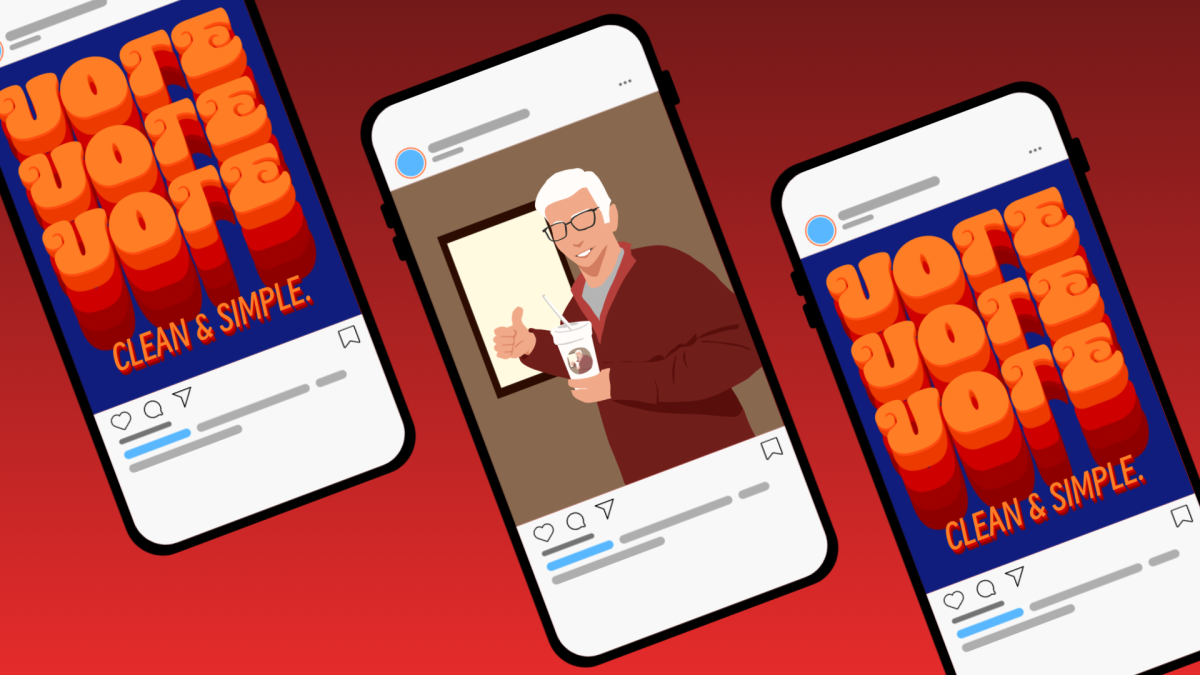
Mayor of Apex Jacques Gilbert has been able to use his social media platforms to elevate himself in the community to a larger-than-life presence while retaining the small-town personality and connection as a local official. Gilbert said the idea to start using social media extensively came to him with the help of his daughter, a professional communication strategist.
Gilbert said the idea to use social media started as a way to get himself out there as a candidate. The idea was not to put himself online as just another candidate, but just focus on showing who Gilbert was as a person.
Looking at examples of social media in bigger elections, like President Barack Obama’s “Yes We Can” slogan in 2008, Gilbert and his daughter found a way to do it on a hyperlocal scale that fit his goals and strategy.
“I started doing just more natural human stuff, like it is always going to be me talking about government, it’s about me connecting with you,” Gilbert said. “Then I give you, hopefully, that kind of gets the trust there and then the transparency comes with it.”
Social media allows voters to create a connection with candidates and officials, even if it is just through the internet and not in person. The connection is Gilbert’s goal because it allows him to create trust with people, something that can be especially important on a local scale.
“I think that’s important because at the end of the day, if you don’t have a connection with the people you serve, then you’re not going to be as effective with trust,” Gilbert said. “First of all, because people have to trust you to really believe in you, you gotta open the door. So when I’m on social media just being me, I think that people are like, wow, that’s a person I can connect with.”
Those connections paid off. In his 2023 race for re-election, Gilbert ran unopposed and won 94.56% of the vote.
Social media has undoubtedly become an important part of political campaigns and effectively spreading a message, but Agada said it is important not to overexaggerate the impact of social media alone. Especially on a local level, strategists must be cautious of how they adapt to the new era.
“Local elections don’t generate the same level of pause and interest like state wide or national elections. So it would be presumptuous for any politician at this point in time to abandon proven strategies that have worked over time,” Agada said.
The younger audience on social media is unquestionable, and the most vital base that politicians like Zohran Mamdani are able to mobilize. When trying to target younger people, he said local politicians should go for a gradual shift while still relying on a time-tested strategy. The goal, either way, is the same.
“They are persons, but they are products, because they are selling it,” Agada said. “And they have to do everything possible to ensure that their positioning appeals to their target audience.”