Any university student or job-seeker could identify that AI is not only new and exciting but also confusing and controversial. Guidelines for usage in the classroom are different from class to class, semester to semester. In the job search, it seems like AI is being used to streamline every step of the process.
Kirsti Cole is a professor in the Department of English and co-director of the Writing and Speaking Program at NC State, where she provides guidance for faculty and students. Cole said most concerns from her clients are regarding the large language models that have been accessible since late 2023, like ChatGPT.
With AI tools more and more unavoidable, faculty and students are just trying to figure out how they feel and how comfortable they are navigating the AI landscape, Cole said.
“What I’m really doing is trying to help faculty articulate their own position on AI,” Cole said. “I think, just like students, the ones that I’ve talked to seem to indicate that there’s a broad spectrum [of attitudes], all the way from joyful, excited usage to never-ever horror.”
Paul Fyfe, a professor in the Department of English and director of the Graduate Certificate in Digital Humanities, said AI is no longer an optional tool in school or online. It has been integrated into almost every online system before we have had time to understand its appropriate uses and potentially damaging consequences, Fyfe said.
“It is everywhere, and [students], instructors and universities are on their heels,” Fyfe said. “They’re getting messages from social media influencers as well as instructors in different disciplines who have different attitudes. Probably every class they’re taking has a different AI policy every semester, and it is wildly confusing.”
Cole said her guidance at the Writing and Speaking Program is informed largely by NC State’s policies regarding AI usage. Rather than accepting AI with open arms (like the University of Florida dedicating itself to integrating AI into every major), NC State simply has a campuswide advisory statement and a website with recommended tools and tips for every level of usage.
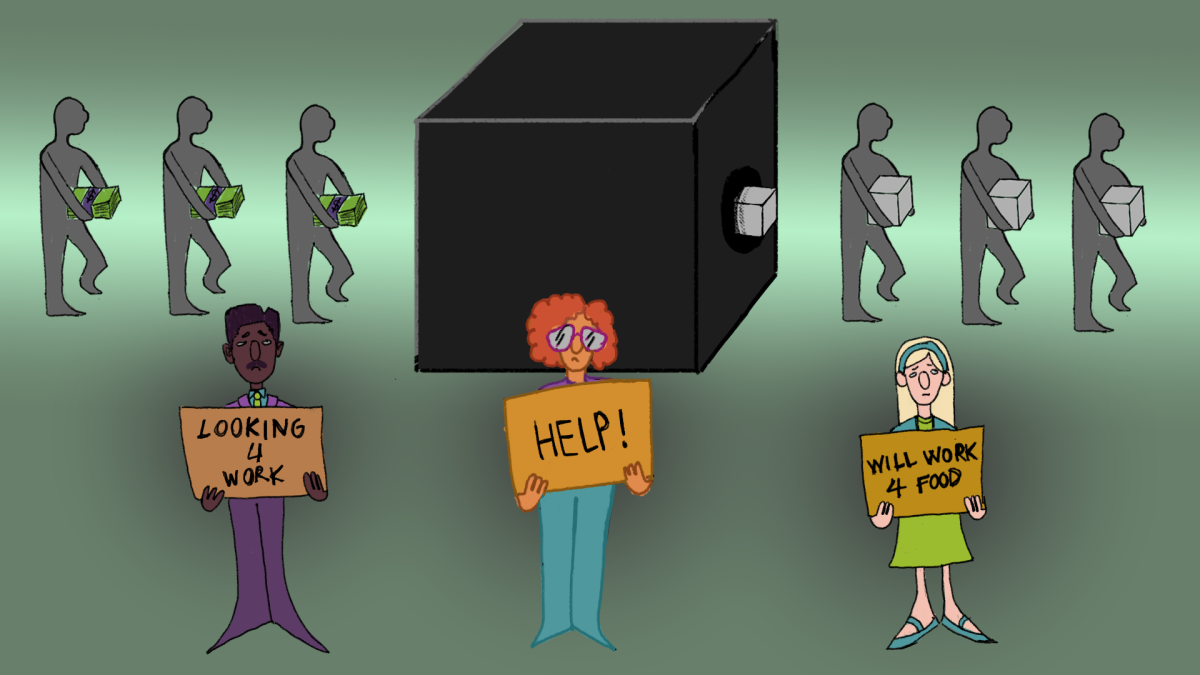
Academia is not the only sector reeling from the last five years of rapid change. The process of seeking and applying for jobs has been altered in many ways.
“It’s like being on tectonic plates that don’t have a crust underneath them. We just don’t know,” Cole said. “Part of what has changed is that if somebody, for example, is applying to a job, part of the research they’re going to want to do on that company before they apply is to see if there’s an AI policy.”
Job seekers now must reorient themselves for every application, as requirements and guidance regarding AI-oriented skills vary by company. Often, descriptions of job positions and requirements are vague or extremely general. Fyfe said this is because there is also a lot of guesswork happening on the corporate level.
“Sometimes recruiters and job postings, they don’t even know what they want. They’re like, ‘We’ve got to have AI in this,’” Fyfe said. “They don’t know what they’re talking about either. Like, ‘This sounds futuristic.’”
Huiling Ding, a professor in the Department of English, researches AI ethics at the intersection of communication and data. A recent study of hers found that, more commonly than not, resumés and interview videos are now being screened by AI programs.
Fyfe said he has anecdotally heard about the challenges of a job market that is saturated by AI-powered application materials and systems of evaluation. He said we might have to shift back to traditional methods of self-marketing, rather than broadcasting our resumes to the whole world online.
“It may be that networking becomes a lot more important for finding entrances into more local communities, which is not necessarily what we’re used to,” Fyfe said. “Making personal contact and qualifying yourself as being a flexible and critical thinker, able to adapt and understand systems as they change so dramatically, that’s gonna be important.”
Both Cole and Fyfe said that there is a middle ground between utter reliance and total avoidance, and that job-seekers and students should aim for general AI literacy.
“The thing that I recommend most to my students is take some time, be it in a class, on your own or in a library workshop, wherever that space might be, and develop some preliminary AI literacy,” Cole said.
Instead of focusing on specific tools that could quickly become obsolete, Cole said it is important to gain a basic understanding of a large set of tools and how they work. That way, job-seekers can have intelligent conversations about AI and work on their ability to adapt to evolving systems.
“I think a student who kind of has no understanding of what any tools do is probably not being served well,” Cole said. “But also using all the tools, I don’t think that’s necessary either. So, we’re kind of on the spectrum.”
Fyfe said that learning AI skills is not as vital as it has been marketed. In most cases, he said, individual jobs require variable skills and will put the time and money into training their employees.
“Jobs are going to train you in what you need to know when you get there because their systems are going to be customized and unique to them. So this notion that you have to know AI in order to get a job is really, I think, a misunderstanding,” Fyfe said.
Beyond getting comfortable using AI tools, job-seekers should focus on their classic people skills. The important question to ask, Fyfe said, is what will distinguish you from the robots?
“What I’m seeing is the more human the communicative act needs to be, the more valued the human is becoming,” Cole said.
JPMorgan CEO Jamie Dimon and Anthropic CEO Daniela Amodei have both said that “soft skills,” or individuals ability to communicate, collaborate and their emotional maturity, are increasingly important when hiring.
AI tools are unreliable and rife with bias, which makes human input irreplaceable. Cole said one of the first things she emphasizes to students is the total unknowns about how these programs are trained and where guardrails lie.
“I don’t know anyone that’s encouraging wholesale trust of these things just because algorithms, they’re created by humans, and they come with massive amounts of bias, technical issues, fabrications and hallucinations,” Cole said.
Human intelligence and nuance are now more important than ever, especially in the realms of writing, communication and creativity. Rather than a universally helpful and efficient tool, corporations and schools are quickly finding that generative AI is useless when humans are operating and checking it.
“Human communication is becoming more necessary in the face of these tools,” Cole said. “It’s going to take a lot of trial and error for those people that value efficiency over everything else to figure out what that line is. So are jobs being impacted? Yes. Are humans going to be erased from those jobs? Only if the people care more about efficiency than they do errors.”