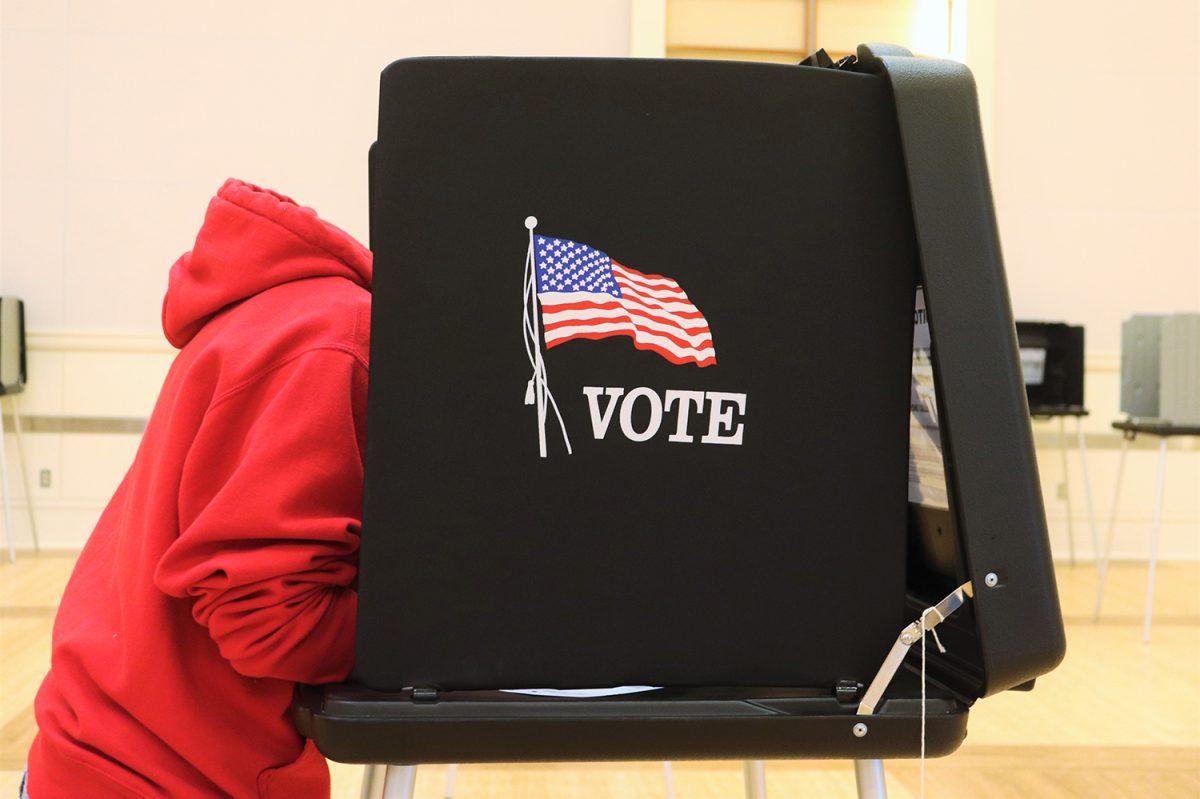

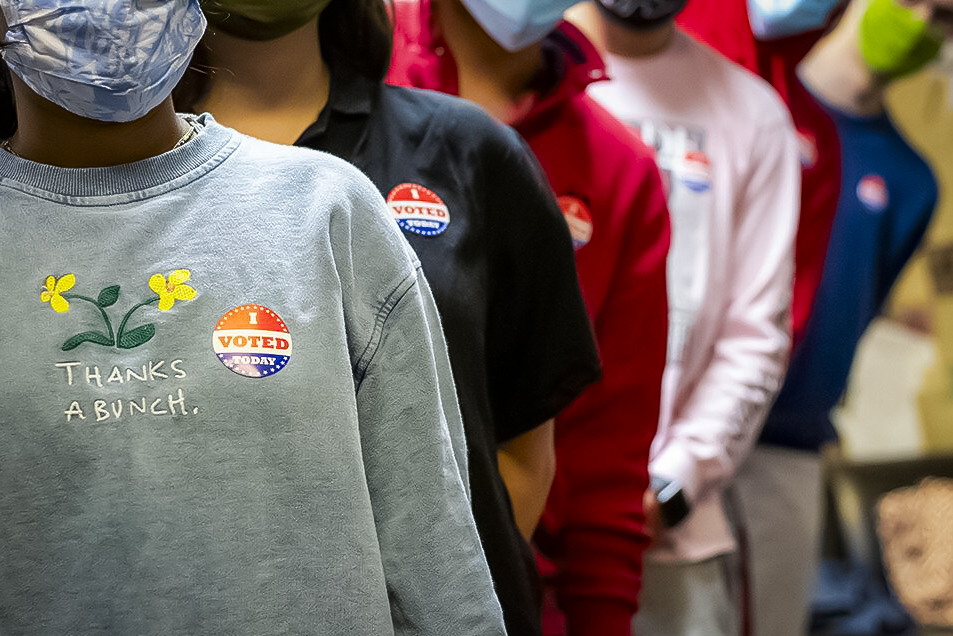
A total of 3,419 Wake County residents voted at Talley Student Union’s early voting site Feb. 12-28 for the federal, state and local primary elections.
Using North Carolina State Board of Elections data, which includes demographic information for each individual voter, Technician analyzed turnout patterns at the Talley site and compared them with early voters across Wake County and other voting sites located in universities in the state.
Editor’s note: Voters are not required to provide information for every demographic category, and a small number choose not to respond. Because of this, totals in some demographic categories may not equal the total number of voters.
Turnout on the rise
Early voting increased both on campus and across the county compared with the last primary election.
Talley recorded 3,419 early voters this year, a 6.5% increase from the previous primary. Wake County recorded 72,646 early voters, a 1.2% increase.
Voters who cast ballots at Talley accounted for about 4.7% of all early voters in Wake County.
Young voter turnout also increased on campus. Voters aged 18 to 22 made up 704 voters at Talley this year, representing about 20.6% of the electorate. Countywide, that age group accounted for 2,397 voters, or about 3.3% of the electorate.
Turnout among voters ages 18 to 22 increased by roughly 3% at Talley compared with the previous primary, while turnout in the same age group across Wake County increased by just 0.32%.
Voters at Talley were also significantly younger on average than voters across the county. The average Talley voter was about 43.8 years old with a median age of 38. Wake County voters had an average of about 58.7 and a median age of 63.
Older voters still dominate
Despite the strong presence of student voters, old voters remained the largest voting bloc both at Talley and across the county.
At Talley, 785 voters were 65 or older, representing about 23% of the electorate. Another 21.7% of voters were between ages 45 and 65.
Older voters dominated turnout even more strongly across Wake County. A total of 33,114 voters age 65 or older cast early votes, representing about 45.6% of all early voters.
Women showed out
Women represented the largest share of voters both at Talley and across the county.
At Talley, 1,713 voters identified themselves as female, compared with 1,389 male voters and 317 voters listed as unknown or another gender.
Countywide, 40,814 early voters identified as female compared with 27,867 male voters and 3,965 voters listed as unknown or another gender.
Party breakdown at Talley
Democratic and unaffiliated voters made up the vast majority of voters at Talley.
Out of the 3,419 voters who cast ballots in Talley, 1,753 were registered Democrats and 1,489 were unaffiliated. Only 167 voters were registered Republicans.
Wake County represented a greater diversity of political makeup, where 38,580 early voters were Democrats, 25,400 were unaffiliated and 8,621 were Republicans.
Among student-age voters at Talley, unaffiliated voters represented the largest group. Out of the 704 voters ages 18 to 22, 413 were unaffiliated, 268 were Democrats and 23 were Republicans.
Race and diversity
Most Talley voters identified themselves as White. White voters made up about 72.7% of Talley’s electorate.
Black voters accounted for about 8.7% of Talley voters, while Asian voters represented about 5.1%. Another 13.5% of voters were listed as other or undesignated race.
A separate group of 115 voters identified as Hispanic or Latino, which the State Board of Elections records as an ethnicity rather than a race. Because of that classification, some Hispanic or Latino voters may also be counted within another racial category.
Across Wake County, white voters made up about 62.9% of early voters. Black voters represented about 23.9% of the county’s electorate, while Asian voters accounted for about 3%. About 1707, or 2.3% of Wake County’s early voters identified as Hispanic or Latino.
Direct comparisons with the student body are difficult because NC State no longer publishes official racial demographic breakdowns for its student population. However, estimates from Data USA based on 2023 data suggest that about 62% of NC State students are white, 9% are Asian, 8% are Hispanic or Latino and 6% are Black or African American.
Compared with those estimates, the Talley electorate included a higher share of white voters and a smaller share of Black voters, while Asian and Hispanic representation appeared closer to the estimated makeup of the student body.
Where Talley voters live
Most voters who cast ballots at the Talley site lived in Raleigh. 83.3% of voters, or 2,849 Raleigh residents, voted there.
Other voters were coming from surrounding towns, including Cary, Apex, Garner and Wake Forest. Cary accounted for 230 voters and Apex for 101.
The most common voters at Talley
Technician’s analysis also identified the most common demographic combinations among Talley voters.
The largest individual voter groups included white Democratic voters over age 65, especially women. White Democratic women ages 65 and older represented 248 voters, the largest of any individual demographic at the voting site. White Democratic males 65 and older counted for 203 votes.
White Democratic women between the ages of 45 and 65 also appeared frequently, with 172 voters. White unaffiliated women cast 139 ballots at the site.
Among student-age voters, the most common profile was white unaffiliated women ages 18 to 22, with 118 voters in total.
The rarest voters
Some voter groups appeared only rarely in the data.
Republican students represented one of the smallest voting blocs in Talley. Only 23 voters ages 18 to 22 were registered Republicans.
Within that group, just four voters were Republican women in that age range and three voters identified as Republican students with unknown or other genders.
Black Republican voters also appeared in small numbers, with only three voting at Talley’s site across all age ranges.
Comparing Talley with other campuses
Early voters at sites at other college campuses also tended to be younger than the surrounding county electorate and were dominated by Democratic and unaffiliated voters.
About 14.5% of East Carolina University voting site voters were ages 18 to 22, compared with about 2.6% in Pitt County overall. At the site serving Duke University, about 6.7% of voters were ages 18 to 22, compared with about 2.5% of voters across Durham County.
Talley’s turnout was greater than the other two sites. Duke gathered 2,753 early voters, while ECU only hosted 991.
What the numbers show
The data suggests that campus voting sites play a significant role in increasing youth voter turnout while still attracting older voters from surrounding communities.
Although students make up a large share of Talley voters, the site draws residents from across Wake County and reflects many of the same broader voting trends seen at the county level.