

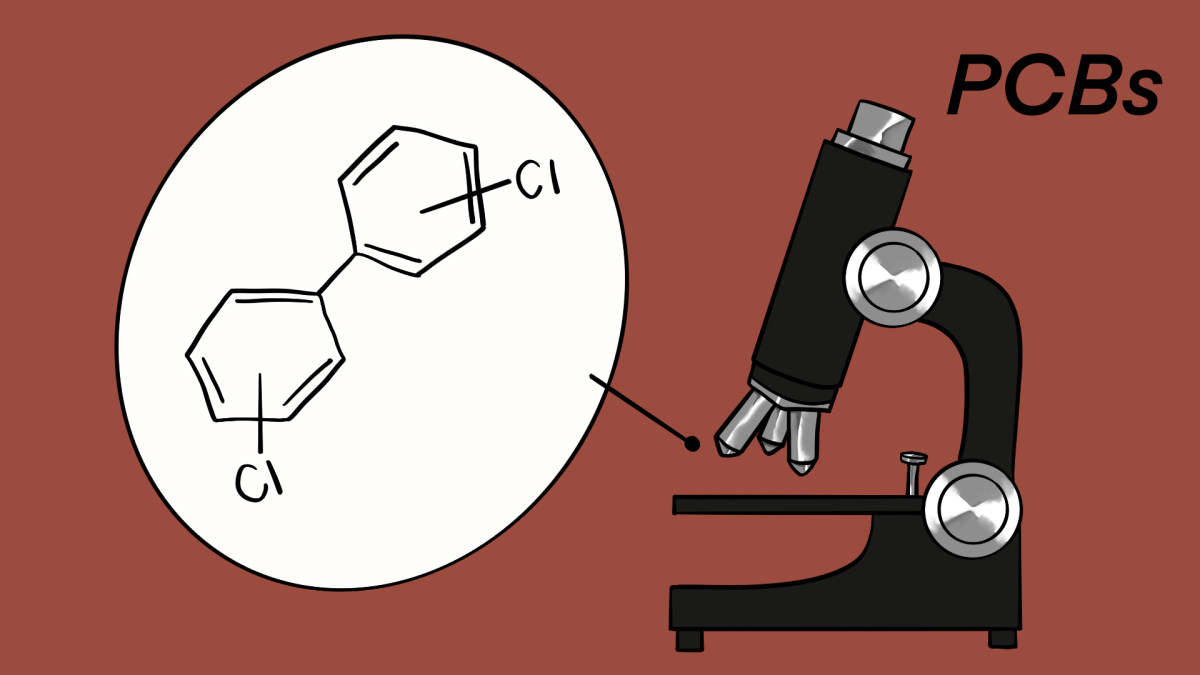
Polychlorinated Biphenyls, or PCBs, are the chemical mixtures found in the infrastructure of Poe Hall. These man-made chemicals are often used in things such as caulk, steel beams and glass block windows, and can have many long-term effects on the human body and the surrounding environment.
Keri Hornbuckle, distinguished chair professor of occupational and environmental health at the University of Iowa, said interacting with this chemical can have many long-term effects on the human body.
“[PCBs] are known human carcinogens, which means they can cause cancer. It doesn’t mean they always will, but they can,” Hornbuckle said. “As a group, they can both initiate the cellular breakdown and affect the DNA. They can also promote the growth of tumors and the spreading of cancer.”
Beyond cancer risks, Hornbuckle said researchers have increasingly focused on how PCB exposure affects the body in other ways, particularly during early development. She said recent studies point to a growing body of evidence linking PCBs to neurological and developmental impacts.
“There’ve been a lot of studies on non-cancer effects. One of the most alarming is that PCBs can cause neurodevelopmental damage,” Hornbuckle said. “Most recently, I think toxicologists have identified a relationship between PCB exposure in utero and as an infant with anxiety-type reactions, ADHD and there’s been some suggestion of correlation with autism.”
PCBs, when in the human body, are stored in fatty tissue and the liver. They can also commonly be found in infrastructure, fish and other contaminated foods.
Hornbuckle said ingestion and exposure to PCBs can affect neurological development and lead to many other metabolic issues.
“There have been past studies showing that [PCBs] can affect the memory of older adults, especially people consuming PCBs in contaminated fish. And then our own research center, in addition to continuing to study the neurological effects on development, has also found that PCBs affect human fat development. So what we call adipogenesis, and the growth and change of fat cells within the human body,” Hornbuckle said. “And exposure to PCBs affects the inflammation, the release of inflammatory components from human fat. And so exposure to PCBs has the potential to aggravate things like diabetes, obesity and other metabolic problems.”
There are exactly 209 compounds of PCBs. Aroclor-1262 is the most prevalent PCB compound that has been found in Poe Hall.
Hornbuckle said this mixture has a higher chlorine content than others, making it good for resource production.
“Aroclor-1262 tends to have a little bit more chlorine in it than other mixtures … some mixtures of PCBs that didn’t contain a lot of chlorine were almost oily. And then, some mixtures that had lots of chlorine were waxy,” Hornbuckle said. “Aroclor-1262 is about in the middle. So it was viscous, but not waxy or solid. And that characteristic could have been particularly desired by the contractors or whoever put it in their product. We don’t really know for sure.”