
One of the leading health issues that many Americans face today is obesity. According to the CDC, a survey conducted from August 2021 to August 2023 found a 40.3% prevalence of obesity in U.S. adults. All the while, the same study found that 9.3% of U.S. adults show a prevalence of severe obesity.
These numbers are alarming, as obesity has been linked to numerous health issues and diseases, such as high blood pressure, diabetes and stroke, to name a few.
Yet, even though obesity is a major health issue, one of the only ways to measure it is with the Body Mass Index (BMI). While it’s widely used as a measure of obesity due to its inexpensiveness and ease, it has been shown to have shortcomings when assessing the actual amount of fat the body has. This is particularly concerning as body fat percentage varies greatly within individuals, and it can’t always be used as a direct indicator of health.
In fact, these shortcomings have caught the eyes of researchers at NC State.
Sujit Ghosh is a statistics professor and researcher who has done extensive work in data science and biostatistics. This includes 155 peer-reviewed articles on various topics that span from statistical theory to more applied fields, such as economics and medicine.
Ghosh explained that BMI may not be the best measure for obesity as it cannot account for different variations in body types and makeup.
“It has been known for a while that [BMI] is not a very good way to measure the obesity of a person,” Ghosh said. “If someone has a lot of lean mass, like athletes. For them, the BMI is not a good way to measure their obesity. They will appear to be obese, but they are not.”
At the same time, alternative measures for obesity that do account for body fat can often be costly or time-consuming for the patient.
“You have to actually go to a clinic to do underwater measures, and then you can kind of estimate the body fat. There is also something based on X-rays called DXA,” Ghosh said. “The problem with that is that for the general public, we cannot always just go to the clinic and measure that [body fat] — it requires time, effort and could be expensive.”
That’s where his research comes in. Ghosh, along with his team of two undergraduate students, second-year studying statistics Bhanuja Ganni and fourth-year studying statistics Mason Donehoo, is using statistical programming and analysis to better estimate the percentage of body fat through examining individual body part measurements from an online repository of datasets called “Kaggle.” Through this, they hope to create a “gold standard measurement”.
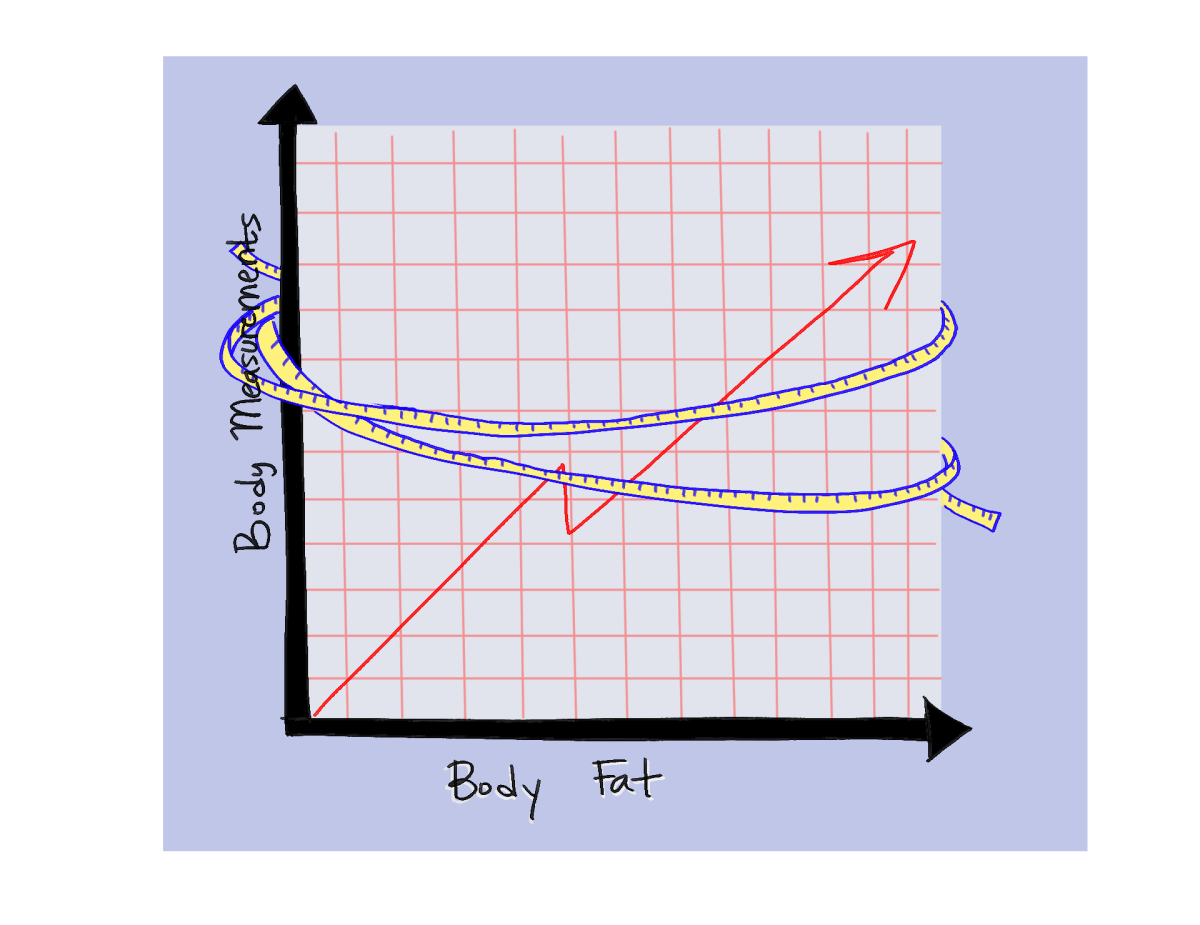
“We’ve been using R programming to fit linear models with a Kaggle dataset. We found that taking the logs of these [measurements] normalizes and linearizes our graphs,” Donehoo explained. “Our main variables are the abdomen measurement, which is taken by the circumference of the abdomen, taken in centimeters, hip, thigh, wrist, neck and, interestingly enough, age.”
By normalizing and linearizing their graphs, the team can better access the relationship between certain body measures and body fat level. These measurements are key for identifying what the team is calling the “gold standard measurement,” or a more precise formula that accounts for variations in body type and their impact on overall body fat.
“If we can find a formula similar to BMI by combining all these other measurements, it would be easier and would correlate with this ‘gold standard,’” Ghosh said.
Ghosh explained that if the team could find multiple measurements that all correlate with their “gold standard measurement,” then they could find a better measure for obesity where the patient could input their own body measures to get an estimate that’s more accurate than using BMI.
Their initial investigations have already yielded promising results. Initial findings with just using a single body part’s measurement, the abdomen, already accounted for more variation in body fat than BMI alone did.
With strong findings so far, the team aims to continue finding more body measurements that could better explain variations in body fat. Particularly, they’ve been making sure that the measurements they find aren’t highly related to each other, as it may be hard to see which measurement is actually affecting their body fat estimates.
“Suppose we have about 13 or 14 such measurements for a subject that are being used to predict body fat. All these 13 or 14 measurements are very easily measurable for any person at home. But they are highly correlated,” Ghosh said.
These measurements are highly coordinated, meaning some — like abdomen size — may help explain differences in body fat. However, combining many related measurements simultaneously may make it harder to identify which ones actually drive the relationship with body fat.
“I could bring the abdomen in as a measurement to explain that variation. But then what? At some point, you cannot add more variables,” Ghosh said.
After the team addresses these limitations, they hope to publish their findings in a journal for undergraduate research. Furthermore, they’ve discussed the possibility of using their new system to create an app that would make measuring body fat more accessible to patients. This new accessibility could build a better understanding of what obesity is and destigmatize it.
“I would assume like 90% of the population has no idea what their body fat percentage is, like I have no idea what mine is,” Donehoo said. “So I feel like understanding that and what it actually means could definitely help towards that stigma.”
This research is something that Ganni hopes will help patients address obesity in an informed and comfortable way.
“I don’t think we should just analyze data for the sake of analysis. I think it’s really important to analyze data so that it can drive meaningful decisions, so it can actually make an impact,” Ganni said.
Coming off promising results, these findings could prove to be pivotal in changing the way we measure obesity, giving more insights into obesity-related disease prevention and destigmatizing discussions around the topic.