

Student Senate voted to approve fee increases of $5.70 for student center operations, $4 for student transit operations, as well as $1 for student government, aimed at increasing disbursements to student organizations. The Senate voted down a $13 increase for the education and technology fee, as well as a $4.30 increase for Student Media, including Technician.
The Board of Trustees chose to approve the education and technology fee at their Nov. 14 meeting, despite Student Senate’s recommendation to reject the fee.
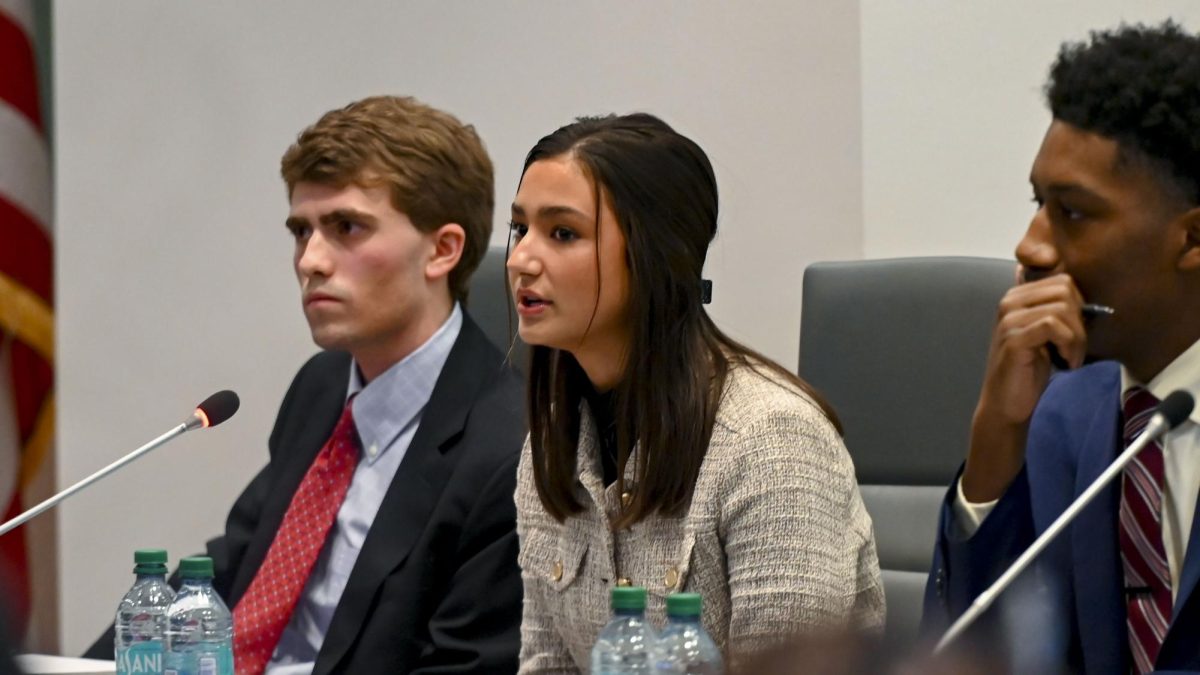
Taquan Dewberry, a third-year majoring in philosophy and applied education studies and the Student Senate President Pro Tempore, voted against the education and technology fee.
“I will proudly say I voted no on that one,” Dewberry said.
Dewberry said he was concerned about the fee’s impact on graduate students.
“That night, I was very cognizant of the fact that the entire graduate delegation voted no for every fee increase because there was a sign of protest in support of graduate students who already have to pay a virtually unlivable amount of fees on campus,” Dewberry said. “It’s really unfair that undergraduates get a lot of opportunities for getting some of our education covered; It’s a lot less for graduate students.”
Dewberry added he was concerned about how the money from the fee would be used, highlighting concerns that money was primarily being used in STEM-focused buildings, with buildings primarily hosting classes in the social sciences and humanities being neglected.
“I feel like a lot of the time we put money into this pot, it goes to our engineering buildings, goes to our design buildings, and that’s great, those colleges deserve that funding,” Dewberry said. “You’ve been in the bottom of Caldwell. I mean, Caldwell, Tompkins and [Winston Hall], sometimes being in that basement is just not fun at all. I even feel like the ventilation down there is poor.”
Judson Avery, a second-year studying philosophy and political science and a student senator, stated he was concerned about the fee money going into a “blind fund” with what he views as little accountability and emphasized legislation he wrote to address the issue.
“In my opinion, it’s very unethical to ask students to pay into a blind fund like that, and I think there’s also an argument to be made that it goes against UNC system regulations,” Avery said. “So there was a resolution that I put through that actually got through to advocate for an undergraduate and graduate representative on the Education Technology Fee Allocation Committee.”
Dewberry voted in favor of the student center operations fee, stating that the money was necessary to support the work student centers do and their ongoing maintenance, as well as the digital OneCard initiative Dewberry is working with the Office of Information Technology on, which would allow students to choose to either use a digital OneCard on their phone or the standard physical OneCard.
Avery said he voted in favor of the student center operations fee increase to maintain Talley Student Union’s current hours.
Dewberry supported the student government fee increase to increase funding to student organizations, but believes the increase is too small to have an impact — citing an estimated $40,000 in revenue and 280 organizations to fund.
The transit operations fee increase was also supported by Dewberry, as he hoped to maintain existing transit service and potentially work to relieve overcrowding and improve areas with poor service coverage, along with ensuring fair wages for employees.
Dewberry voted in favor of the Student Media fee increase that failed to pass the Senate.
“I voted yes on the Student Media fee increase. I think in my opinion, and not to be offensive to anyone, I feel like it was tone deaf for students that had to vote no to that or for any student who voted no to that fee increase,” Dewberry said.
Citing concerns regarding free speech on the national and university level, Dewberry stated he believes Student Media is one of the last venues for student free speech and student voices.
“If no one else is going to exercise their freedom of speech, if no one else in the nation, as far as like media are able to exercise it without fear of having their networks pulled or their comments censored, if staff and faculty at the university can’t exercise their freedom of speech, if the university can’t take a stance on anything, seems like the last people able to really talk about that are the citizens,” Dewberry said.
Avery said he would like to see less antagonism between student government and Student Media and that he believed the print edition is important to student outreach.
“I think a lot of students, that’s the only way they interface with Student Media, ‘oh, there’s a new print edition, let’s go pick it up,’ and then they think ‘oh, let me go on Technician’s website maybe,” Avery said. “What I’ve heard since is that it wasn’t only about print. The arguments that were given were mostly about print.”
Discussions in the Student Senate revolved primarily around the issue of funding for print publications, but did not take into account other budgetary considerations — Dewberry said he was not called on during the debate in the Senate to share his concerns.
“I feel like people love to criticize our media, but then you should really think about, how can you, especially as people in student government, how can you expect our media to be the best they can if we just said no to them getting a fee increase, and they have to divert their resources to other things?” Dewberry said. “I think my biggest concerns are a decrease in capacity next year, not just in printing, but just in terms of how much you are able to produce as journalists.”
Patrick Neal, Director of Student Media Advising, stated that half of the proposed increase aimed to cover maintaining the weekly print schedule of Technician and the biweekly schedule of the Nubian Message, with the other half aiming to cover inflation.
Neal said Student Media has not asked for an increase in seven years, and asked for a $1 decrease the last time they were before the fee board due to a surplus.
“The Student Senate, they said some very complimentary things about what we do. I think they truly do appreciate what the newspapers and what all of our media groups provide to the community,” Neal said. “The consensus was that… digital means was just a better method of delivery. And our online readership dwarfs our paper pickup rate,” Neal said, citing a paper pickup rate of about 1,900 compared to 3,000 printed total.
Due to the $45,000 budget shortfall, Neal said Student Media is looking at reducing out-of-state travel for conferences for Student Media employees as well as allowing both Technician and Nubian Message six issues a year, instead of their current weekly and bi-weekly publication schedules. Future increase requests will likely not restore print production, stated Neal, and will likely be smaller.
Increases will likely continue to be necessary to cover expenses, Neal said, with more drastic cuts coming down the line if future increases are not approved. Neal also hopes Student Media will be able to gain additional revenue from alternate sources, with 80% coming from student fees currently.
Avery stated that he would like for Student Senate and government to have more input on student fees and stated that he believed upper leadership in student government was silencing the voices of student senators, advocating for Student Senate to have its own vote as a body on the committee, separate from leadership. Avery added the bill to pass the legislation was being held up due to procedural disagreements.
“Higher leadership in the Senate silenced a lot of voices that were speaking about [the education and technology fee], And so following that I sponsored a Senate resolution to put a referendum on the student body ballot… a resolution from all the student body to the university itself calling for senate’s vote to count as one vote on this committee,” Avery said.
Avery highlighted the difference between the Student Senate’s vote and leadership, adding that despite being near-unanimously denied in Student Senate, it was unanimously approved by the fee committee.
Dewberry added he would like to increase public input in student government.
“As much as we want to say we know what the student body wanted, nobody knows what the 40,000 people on campus [want] just because you heard from 100,” Dewberry said, “But when it comes to student fees and things like that, I think we can always do a better job of trying to reach out.”