
Editor’s note: After receiving a statement from the Associate Director for Learning Space Support in the Office of Information Technology, information in this article was updated to clarify its contents on Feb. 13, 2026.
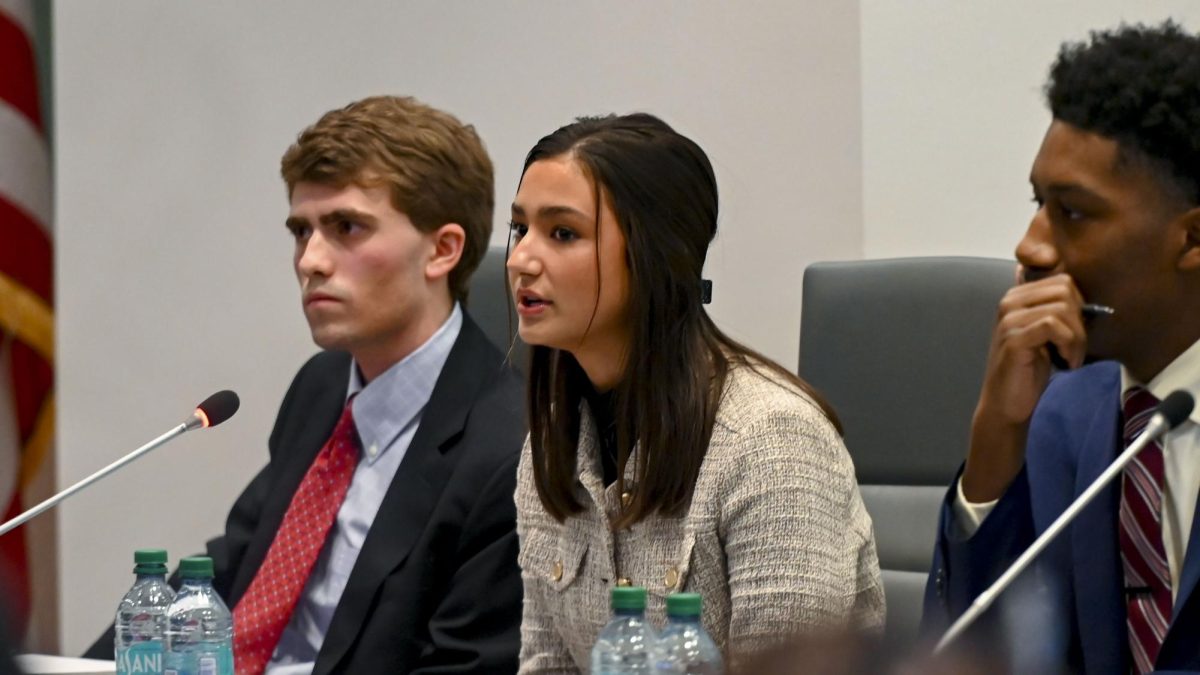
The NC State Student Senate unanimously voted to pass the Dabney Hall Environmental Testing Act at their Feb. 11 meeting, a resolution calling for the suspension of occupied renovations inside of Dabney Hall until third-party testing for hazardous substances is conducted.
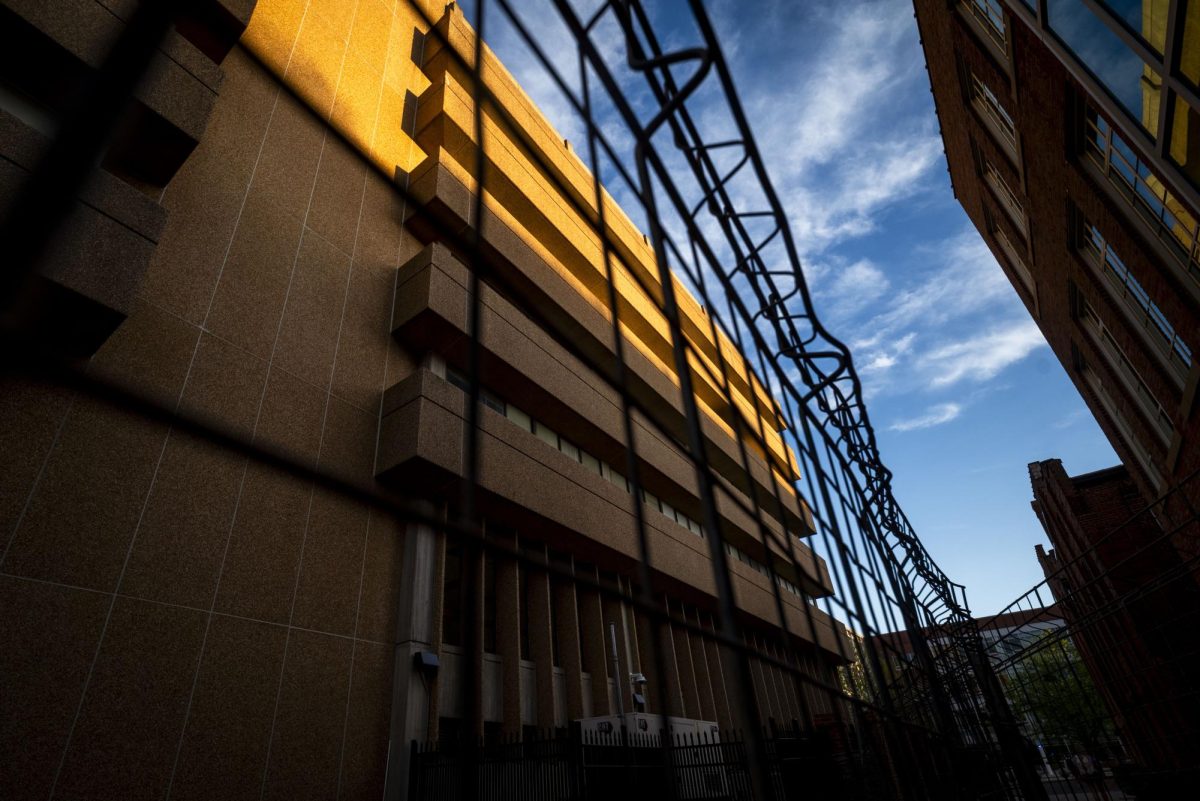
Dabney Hall underwent its first comprehensive renovation in October 2025, following years of complaints about the building’s air handling and HVAC issues. Students, staff and faculty have occupied floors G through five in the building during the first phase of renovations on the seventh and eighth floors.
Technician previously reported on student and faculty health and safety concerns that were expressed ahead of the start of renovations. Concerns stemmed from testing that showed polychlorinated biphenyls (PCBs) present in the interior and exterior caulking of the building, as well as the discovery of the same toxicant in Poe Hall, which resulted in its closure in 2023.
Evie Shackles, a fourth-year studying psychology and student senator for the College of Humanities and Social Sciences, is a member of the Campus Community Alliance for Environmental Justice and author of the resolution.
“I wrote this resolution because there have been a lot of concerns about Dabney Hall and it being unsafe and being full of hazardous chemicals,” Shackles said. “… In 2021, a chemistry professor and his student measured the air quality in the building and they found numerous volatile chemicals, and one of the professor’s students actually became sick because of these chemicals, and the professor and his students were moved to Centennial.”
Shackles said the University has been downplaying the concerns of multiple professors and members of the chemistry department.
“Multiple chemistry professors in the Department of Chemistry have stated that Dabney Hall should not be occupied during the renovation, including one professor who theorized that the University Administration would not be authorizing this renovation if they themselves occupied the building,” Shackles said. “I think we should be listening to these chemistry professors who are literal experts and have literal PhDs and know what they are talking about.”
R116 cites several health and safety reports, including one from as early as 2005, which highlighted “air conditioning failures, flooding, chemical odors, and fume hoods below modern standards, ultimately concluding that the building was ‘in extremely poor shape.’”
During deliberations and debate preceding the senate’s vote, Everett Jensen, a first-year studying textile engineering and student senator from the College of Engineering, said that as a member of ClassTech, they were asked to remove electronic infrastructure from the sixth floor of Dabney Hall and were instructed to wear protective gear during the removal. They said the floor was closed because “it was deemed unfit to be occupied due to all the chemicals that were being stirred up.”
Mick Kulikowski, director of strategic communication and media relations at NC State, said this information was inaccurate.
“The University proactively and purposefully planned for the 6th floor to be vacated prior to construction to provide a buffer floor between the construction area (7th and 8th floors) and the occupied floors (Ground floor through 5th),” Kulikowski wrote in an email statement to Technician. “The design and construction logistics plan have always included this buffer.”
Kulikowski said the vacant floor helps prevent noise and debris from reaching the occupied section of the building.
“In addition, everything is sealed above the 5th floor to prevent anyone from accessing floors 6-8,” Kulikowski wrote.
Ron Bradley, associate director for learning space support in the Office of Information Technology, said two ClassTech staff and two student employees removed AV equipment from room 623 in Dabney, but they were not instructed to wear any protective gear.
“ClassTech was not instructed by Facilities or any other authority to wear protective equipment while on the sixth floor,” Bradley wrote in an email to Technician.
When asked if ClassTech or OIT were removing electronics from other floors in anticipation of renovations, Bradley said he does not have “visibility into activities on all floors of Dabney.”
“We support academic spaces on floors 1-3; Room 623 is the only space outside of that scope where we received a request related to renovation activity,” Bradley wrote.
In addition to pausing renovations and conducting third-party testing, the resolution asks the University to close Dabney if testing determines it is unsafe and “remediate the building in a safe, ethical, and transparent manner.”
To Shackles, “ethical” remediation means the university must follow proper safety protocols for disposing of toxic chemicals in a sustainable fashion.
Zainab Aleem — a fourth-year studying chemistry, student senator, legislative secretary and chair of the standing committee on diversity, equity and inclusion — expressed her approval of the resolution.
“I think this is honestly amazing, and it needs to be done,” Aleem said. “I am a chemistry major. I’ve spent all my time in Dabney. I have done research in Dabney, and I’m reading the article from Technician and the majority of these people have been my professors or my PIs, so it’s kinda freaky.”
When asked by a fellow senator how long testing and remediation would take, Shackles said she didn’t have a good answer.
“I think the University should have dealt with this a long time ago and then we would not be in this situation, but unfortunately, we’re in the situation now,” Shackles said. “So I think it needs to be dealt with before it gets worse.”
The $140 million renovation project at Dabney includes adjacent projects in Cox and Broughton Halls and is expected to be completed by spring 2028.
This is a developing story.