I’ve heard more than one person say that spring break is rolling around just in time this year. Undergrads are recovering from midterms and grad students are approaching thesis deadlines. But a week-long break won’t feel like enough because it never does, and we’ll be aching for summer as soon as we’re back on campus.
However, summer doesn’t have to feel so far off. If you want to get ahead of the curve and gaslight yourself into thinking summer’s already here, these are some books to dive into over spring break.
Emily Henry: “Happy Place” (2023)
Go figure, I know. Emily Henry is the queen of beach reads, titling one of her own cutesy summer romance novels by that name exactly. While you can’t go wrong with her classics like “Beach Read” and “People We Meet on Vacation,” some of her more recent novels will transport you to a warm New England summer while captivating you with more complex and compelling characters than her earliest narratives.
Romance-lovers will enjoy the fake dating trope in “Happy Place,” but Henry offers a twist. The characters who are fake dating are actually exes who haven’t told their friends they’ve broken up yet. When Harriet and Wyn see each other on the week-long annual vacation they take with their friend group in Maine, they agree to pretend to still be together to avoid disrupting the group’s dynamic.
Grappling with themes of love, longing, self-discovery and found family, “Happy Place” will make your heart ache and your fingers twitch in their eagerness to turn the page.
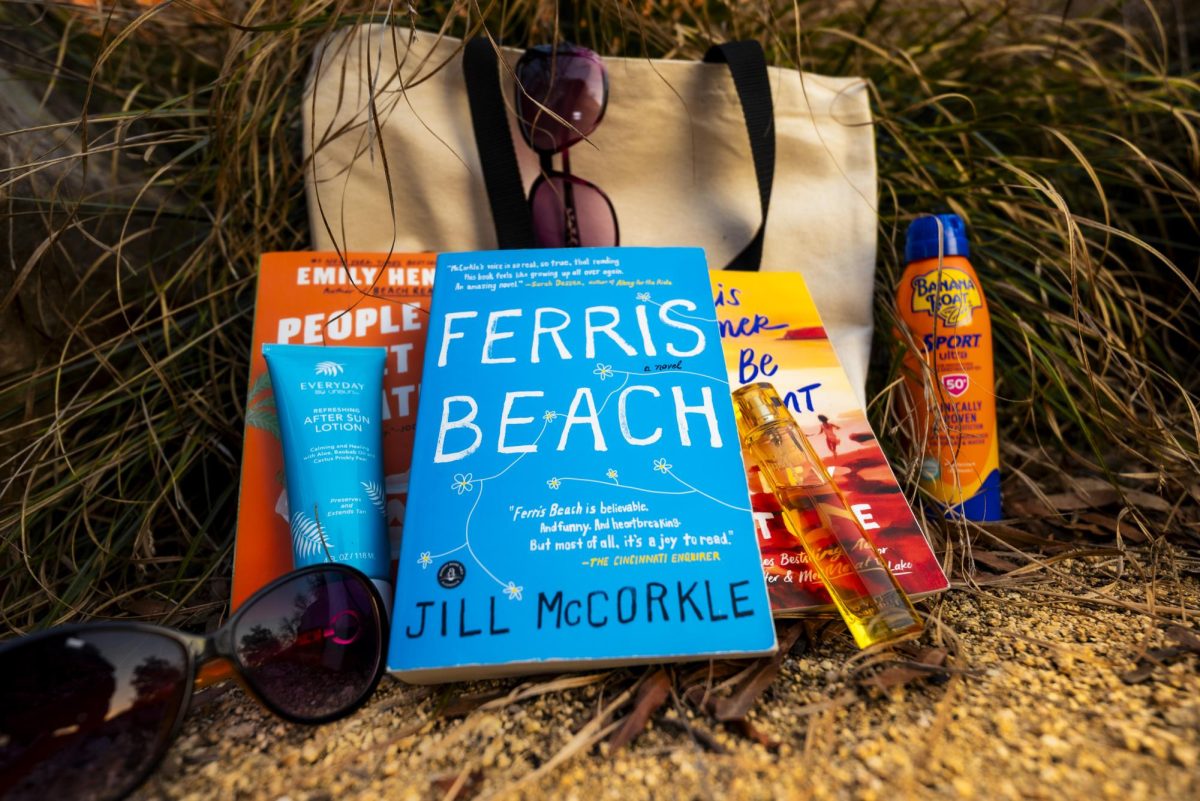
Jill McCorkle: “Ferris Beach” (1990)
Probably a little obvious from the name, but this book is so much more than that.
This coming-of-age tale is set in the 1970s and follows a young girl named Katie Burns from adolescence to her teenage years. She befriends a girl her age, Misty, whose family recently moved into their small neighborhood. Katie is captivated by, and longs for, the family’s “daring, outrageous, fun” nature, until one Fourth of July changes everything, dismantling the perfectly-crafted and idealized image she has generated.
Another key character in the book is Katie’s mysterious, romanticized older cousin Angela. Young Katie often imagines Angela is her mother, rather than the practical and reserved Cleva who really gave birth to her, highlighting themes of mother-daughter relationships and reality versus imagination.
This is a highly character-driven novel, though there are important plot moments that keep you on the edge of your seat. Oh, and Jill McCorkle used to be a professor of the practice in NC State’s master’s in fine arts program for creative writing.
Ali Hazelwood: “Problematic Summer Romance” (2025)
Problematic indeed. Whether you’re fantasizing about a Sicilian getaway for the summer that you’re never going to have, or if you come from money so your family’s already going to Italy “The White Lotus” style, this book feels like an obvious pick to me.
Hazelwood’s second installment of the “Not in Love” series follows 23-year-old grad student Maya attending her older brother’s destination wedding in Taormina, Italy. Her brother’s 38-year-old best friend Conor is also at the wedding, and the pair evidently have a complicated history that gets revealed over the course of the novel as their summer fling plays out.
This book isn’t on my list because it’s morally upright nor spectacular by most criteria. However, it is an interesting study on power dynamics in heterosexual relationships, and it truly immerses you in the setting. And it’s interesting to watch Hazelwood attempt to de-problematize the relationship by problematically presenting Maya as “mature for her age.”
Lee Smith: “Oral History” (1983)
One of my favorite novels, but it won’t be for everybody. Honestly, I’m kinda pushing the summer-y criteria with this one, but it feels that way to me.
Using the framing narrative of a college student with a tape recorder returning to her fictional hometown of Hoot Owl Holler in the Virginia mountains to capture the stories of her family’s ancestors, the novel chronicles generations of the Cantrell family over nearly a century.
Smith’s website calls the novel “one of Lee Smith’s most ambitious works” that invokes multiple points of view and is deeply rooted in Appalachian folklore.
This novel is not for the faint of heart. It deals with difficult subject matter including, but not limited to, violence, incest and suicide. Consider yourself warned, it’s not a light and fluffy beach read, but it does have that warm-weather, late summer feel.
André Aciman: “Call Me By Your Name” (2007)
Many of you have seen the movie, some of you have read the book. I have done neither.
However, I recently told some friends about the list I was making and they highly recommended this book. They didn’t say anything about a peach, but I didn’t ask.
The book follows 17-year-old Elio and 24-year-old Oliver who spend a summer at Elio’s family’s villa on the Italian Riviera. Oliver is a post-doctoral scholar living with Elio’s family for six weeks as part of an annual scholarship intended to be spent revising a book manuscript. The story interrogates obsessive first loves and the lasting effects of life-changing memories.
I’ll probably go read it now.
Rumaan Alam: “Leave the World Behind” (2020)
Wikipedia calls the film an “apocalyptic psychological thriller” which pretty much checks out. If you’re not someone who’s into lovey-dovey stories or literary fiction, this is a good option.
“Leave the World Behind” is about a white family of four traveling to a remote luxury home in Long Island for vacation. They rent the house from a Black married couple, George and Ruth, who show up on their doorstep one night seeking refuge following a power outage that has taken over the city. Reluctantly, Clay and Amanda, the white parents, allow them to stay at the house. Strange technological, and ultimately societal, collapse ensues, and that’s about all I can say without spoiling it.
But don’t watch the movie. It’s trying too hard to be intellectually stimulating, whereas the book achieves that on its own, breaking down privilege, whiteness and the fear of the unknown.