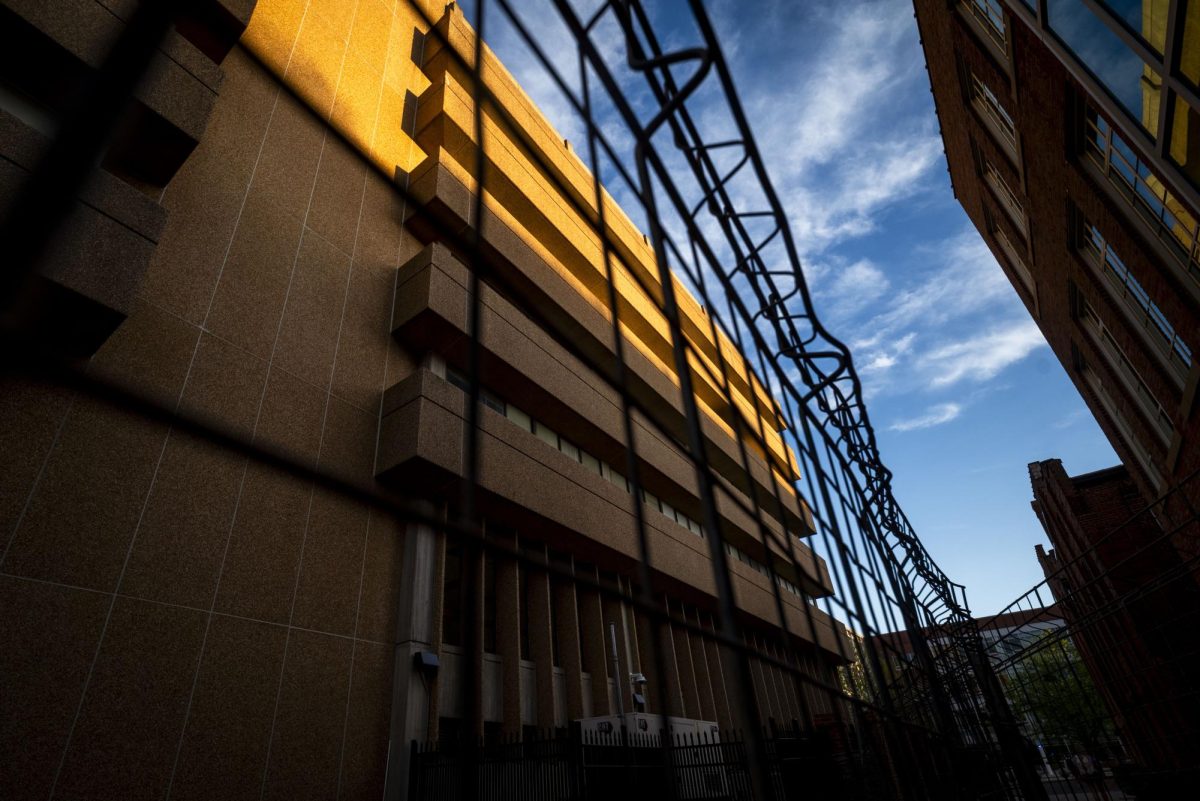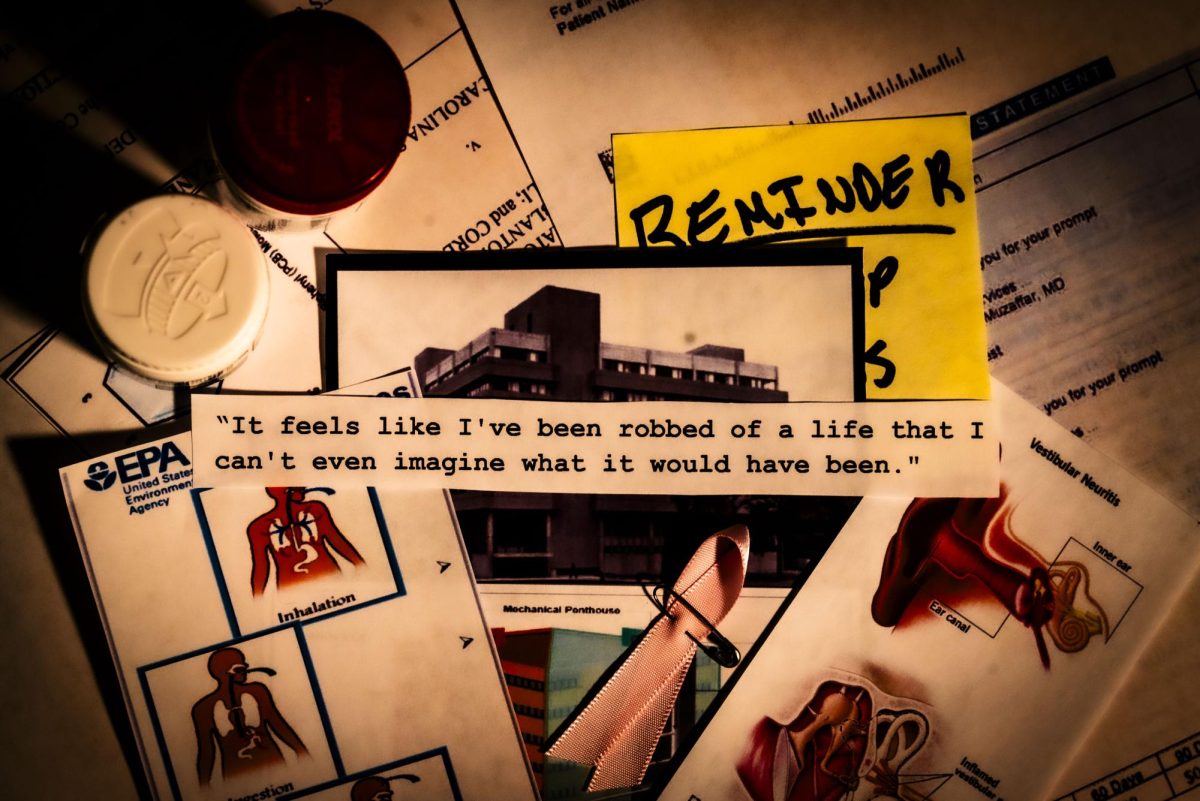


As the N.C. General Assembly continues to struggle to pass a state budget, funding for remediation of Poe Hall and PCBs across campus is on hold.
The state legislature has proposed funding for the remediation of Poe Hall, including authorized spending for rehabilitation and renovation up to $185 million.
Roughly $25 million would be disbursed in the 2025-2026 budget year, $75 million in the following year and $80 million in the 2027-2028 year, pending legislative approval of a new budget.
Steven Greene, professor of political science, stated personal political issues for N.C. Senate Leader Phil Berger could be distracting him from focusing on the budget. Berger conceded Tuesday following a tough primary fight and the recount process against Rockingham County Sheriff Sam Page. Berger lost by 23 votes.
“The truth is, Republicans in the House and Republicans in the Senate cannot agree,” Greene said. “Honestly, when you say Republicans in the Senate, you mean Phil Berger, whose attention has been very much elsewhere. And if he in fact does lose this election … that might change things.”
Greene added that the lack of a budget has affected campus, including in hiring, salaries, maintenance and the ability to respond to crises like Poe Hall.
“You can get a lot done by just going on what came before … but things happen. Things come up, and you need to be able to respond to what’s going on and what’s changing,” Greene said. “When the legislature is unable to do that, important things fall by the wayside, and starting to finally do something about Poe Hall, I would say, is an important thing on many different levels.”
As key UNC system leaders, including the UNC System’s Chief Financial Officer Jennifer Haygood, have described critical needs as being “stuck on a pause,” Greene stated the lack of a budget shows that universities are not a priority for Republicans in the state legislature.
“Republicans have become increasingly alienated from higher education in recent years,” Greene said. “That’s almost surely reflected as well by Republicans in our state legislature, who certainly on one level understand the value of higher education, but on another level have serious doubts about how those of us here working in universities are conducting higher education.”
PCB contamination is also broadly not seen to be a salient issue or high-priority for the state legislature, Greene said.
Greene added that protests and efforts from campus groups aiming to address PCB contamination would likely be ineffective due to the sheer scale of contamination across campus, with PCBs commonly found in buildings constructed in the 1960s and 1970s.
“Obviously something went really wrong with Poe Hall in that regard. It’s one of those things where it’s almost too big a problem to say, ‘Well, we can just fix it,’” Greene said.
Poe Hall was set to receive Health Hazard Evaluation by the National Institute for Occupational Safety and Health before the temporary pause, possibly caused by mass layoffs at NIOSH.
A federal investigation into Poe Hall resumed after Congresswoman Deborah Ross, a Democrat representing North Carolina’s 2nd District, sent a letter to the United States Department of Health and Human Services.
“We’ve already won some important battles, including forcing HHS to resume its investigation of contamination at Poe Hall,” Ross said at a moderated forum earlier this month.
Ross added that the report had recently been released.
The failure of the state legislature to address PCB contamination is symptomatic of broader problems regarding the health of our institutions, Greene added.
“Our democracy is not in great health right now,” Greene said. “And the inability to deal with obvious and serious problems is a reflection of that.
Greene emphasized that there are no easy solutions to the issue of PCB use and contamination, adding that policy choices often have difficult tradeoffs to address.
“It’s too easy to say, ‘Oh, they let poison into our buildings,’ or ‘Oh, we just need to get rid of all the PCBs,’ … it can be really hard to know just how much harm to human health various chemicals are creating,” Greene said. “What if I told you that using this particular building material would result in one additional person getting cancer … but then the next cost-effective building material is going to double the cost because of that. Double the cost, you can spend less money on helping to treat people with cancer.”